CIA Sponsored Terror, Civil Liberties, Criminalizing Dissent, FBI Intrusion, Green Scare, Habeas Corpus, Human Rights, Political Prisoner, RFID, Supreme Court, Surveillance, Targeting Muslims, Torture, Truth to Power, War Resister
Podcast: Play in new window | Download
Updates:
- Khaled El-Masri and the European Court of Human Rights Decision
- European Court of Human Rights Labels CIA Interrogation Procedures as “Torture”
—–
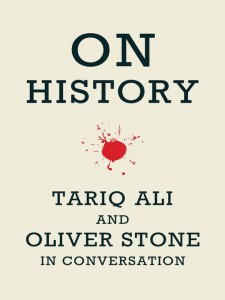
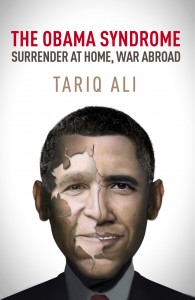
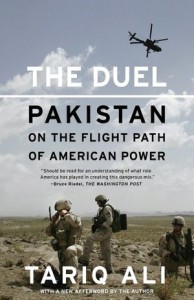
Tariq Ali: Turning Points in the History of Imperialism
Today we’re joined by internationally renowned writer and activist Tariq Ali. Tariq is visiting from London where he is editor of the New Left Review.
A writer and filmmaker, Tariq has written more than 2 dozen books on world history and politics, including The Duel: Pakistan on the Flight Path of American Power, The Obama Syndrome and On History. We talk specifically about several turning points in global history, the Occupy movement and US elections. .
Tariq Ali:
- The think the first World War was crucial but it wasn’t the war itself it was the consequences of that war. Here you had huge empires.
- The Russian revolution challenged capitalism frontally and its leaders said we want Europe to be with us, on our own we can’t do it. We need the Germans, we need a German revolution. That frightened the capitalist class globally.
- Woodrow Wilson, decided that the time had come to intervene. 22 countries came to intervene.
- This intervention made it impossible for the early infant Soviet Union to achieve what it wanted to achieve.
- The Second World War was an effort by the German ruling class to get its share of the world market in countries.
- The US helped rebuild Japan and Germany. They helped build France and Britain by the Marshal Plan and that has never been done by a big imperial power before.
- They managed to get the Soviet Union to implode by having an arms race. The Russians fell into their trap and decided to go for the arms race, had they not history might have been different.
- I hope the Chinese do not fall into the same trap, threatened by Obama’s puny little bases in Australia.
- People, early settlers in the United States got land totally free and they took it and that created the belief in the American psyche of private property.
- The Soviet Union imploded because the people lost faith in the system.
- The entire elite in the United States and Western Europe is wedded to the Washington consensus that emerged after the collapse of communism. The center piece of this consensus was a system which believed in market forces. I refer to it as market fundamentalism.
- We are confronting the extremism of the center and the result of this is no alternatives exist within mainstream politics. The effect that this is having is hollowing out democracy itself.
- Occupy: What we need is for these movements to call an assembly nationally and discuss a charter of demands for progressive America which need only be ten demands but something around which people can rally. I think its a movement that should be created bearing what the needs of ordinary people are.
- In order to understand the laws of motion of capital, you have to read Marx. It’s true capitalism has become much much more complex. Zombie capitalism, or fictitious capitalism, where money is used to make more money.
- It’s not money that’s creating productive goods.
- I had written a book on South American because I got very engaged in the Venezuela-Boliverian struggle and got to know Chavez very well.
- If Americans had access to Cuban medicine, the pharmaceutical companies would collapse, they would never let it happen.
Guest – Tariq Ali, writer, journalist and film-maker, born in Lahore and educated at Oxford University. He writes regularly for a range of publications including The Guardian and The London Review of Books. He has written more than a dozen books including non-fiction as well as scripts for both stage and screen.
—–
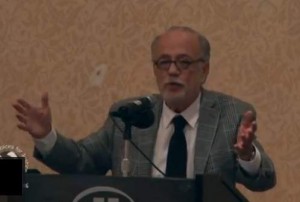
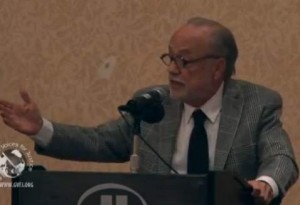
National Lawyers Guild 75 Years
Hundreds of National Lawyers Guild members and allies gathered to celebrate the organization’s 75th anniversary at the Law for the People convention in Pasadena, California. We hear excerpts from speeches from the National Lawyers Guild Convention by Attorney Jim Lafferty The 2012 Law for the People Award was given to Jim Lafferty.
Scholar and activist Angela Davis delivered the keynote address and among the convention honorees will be Margaret Burnham, a professor of civil rights law who, as a young lawyer, helped secure Davis’s 1972 acquittal on high-profile charges.
Founded in 1937, the National Lawyers Guild is the oldest and largest public interest/human rights bar association in the United States. Its headquarters are in New York City and it has members in every state.
Jim Lafferty, Executive director of the National Lawyers Guild in Los Angeles and host of The Lawyers Guild Show on Pacifica’s KPFK 90. 7 FM.
——————————————————————-
Afghanistan War, CIA Sponsored Terror, Civil Liberties, Criminalizing Dissent, Extraordinary Rendition, FBI Intrusion, Guantanamo, Habeas Corpus, Human Rights, Political Prisoner, Prison Industry, Prosecution of the Bush Administration, Supreme Court, Targeting Muslims, Torture
Podcast: Play in new window | Download
Updates:
——
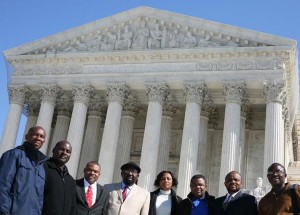
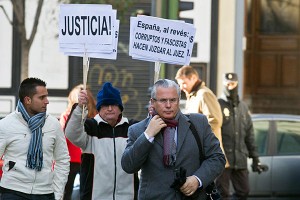
Universal Jurisdiction: Kiobel v. Royal Dutch Shell / Bush 6 Case In Spain
This week the US Supreme Court will decide if corporations could be held liable in U.S. courts for violations of international human rights law in the land mark case Kiobel v. Royal Dutch Petroleum. The case was brought by families of seven Nigerians who were executed by a former military government for protesting Shell’s exploration and development and is pushing to hold corporations accountable for human rights violations. The Supreme Court will also consider how the Alien Tort Statute Claim can be used the Kiobel case. A one sentence law that goes back to 1789 when the first judiciary act was brought in the United States. We’ve discussed this statute with several past guests including attorneys Peter Weiss and Rhonda Copeland who were instrumental in beginning the first cases in which human rights violations, taking place in other countries could actually be litigated in the United States.
We also discuss the recent amicus filing by a group of international human rights organizations and experts before the Spanish Supreme Court. The brief asks the Spanish Supreme Court to overturn a decision not to pursue a criminal case against six former officials from the Bush administration for their role in directing and implementing a systematic torture program. Past shows with Katherine Gallagher.
Attorney Katherine Gallagher:
- The Kiobel case has been in US courts since 2004.
- The claims were brought in the Southern District of New York, under a law from 1789, known as the Alien Tort Statute.
- This law allows non-US citizens to come into a US federal court and assert violations of the Laws of Nations or International Law.
- A recent precedence for this is Citizens United, what happened was that the Second Circuit ruled that corporations could not be held liable for these egregious human rights violations under the Alien Tort Statute.
- The question of corporate liability went up to the Supreme Court first.
- We had 2 judges from a 3 bunch panel in the Second Circuit suddenly come out in the fall of 2009 and say there is no corporate liability. That is the question that went up to the Supreme Court.
- Four other circuits had look at this question and they said of course corporations can be held as liable as an individual, a natural person.
- The Alien Tort Statute allows for a civil suit and civil liability rather than criminal liability.
- The key case from 1980 that CCR brought, the case of Filartiga, this case which the Supreme Court affirmed in 2004 as being on solid legal basis, claims by a Paraguayan, against a Paraguayan for actions that occurred in Paraguay.
- So its very strange that the Supreme Court was asking in a very broad fashion whether the ATS could apply to actions that occurred in another country. That is what the bulk of the cases brought under the ATS have been about.
- Some of the cases where the ATS is used are for some of the most serious violations. Cases of war crimes, crimes against humanity, torture, not your run of the mill case.
- What the justices seem to coalesce around was the issue of whether there’s an alternate forum. If the claims against Shell could have been brought in the UK or in the Netherlands, maybe they don’t need to be brought in the US.
- We’ve seen a trend in the last 20 years of other countries adopting stronger laws that allow for redress, and accountability, so we don’t have to be the world’s policeman.
- There have been 2 cases that percolated up in the last 4 years in Spain.
- The first is a widespread investigation of the torture program then Judge Balthazar Garzon. This is a case looking at torture in Guantanamo, and potentially in Iraq and Afghanistan, looking at the whole U.S. torture program. That case was brought on by 4 named plaintiffs.
- That case is very wide ranging, and willing to go up the chain of command as far as the evidence leads.
- There is a second case that was brought against specific U.S. individuals. They’re known as the Bush 6, including, Jay Bybee, John Yu, David Addington, Alberto Gonzalez. Six men who served as lawyers and argued to have essentially created both the legal structure that enabled the torture program, providing arguements for immunity and protecting participants of the torture program from accountability.
- Spain has a long and proud history of upholding International Law. Spain is where we had the case against Augusto Pinochet in the late 90s.
- We’ll be doing this as long as we need. We need to have accountability, its really critical.
Guest – Katherine Gallagher, Senior Staff Attorney at the Center for Constitutional Rights (CCR), where she focuses on holding individuals, including US and foreign government officials, and corporations, including private military contractors, accountable for serious human rights violations. Among the cases she has worked, or is working, on are international accountability efforts for U.S. officials involved in torture (Spain, Switzerland, Canada); ICC Vatican Officials Prosecution; Arar v. Ashcroft, Corrie v. Caterpillar, Matar v. Dichter, Saleh v. Titan, Al-Quraishi v. Nakhla and L-3, Estate of Atban v. Blackwater.
—————————————————————————————————
Civil Liberties, Criminalizing Dissent, FBI Intrusion, Habeas Corpus, Human Rights, Military Tribunal, Political Prisoner, Supreme Court, Torture, War Resister
Podcast: Play in new window | Download
Updates:
- Bradley Manning Public Access Case: Amicus Brief Filed by Reporters’ Committee for Freedom of the Press
- Southern Poverty Law Center Lawsuit Against Chemically Spraying Students
———
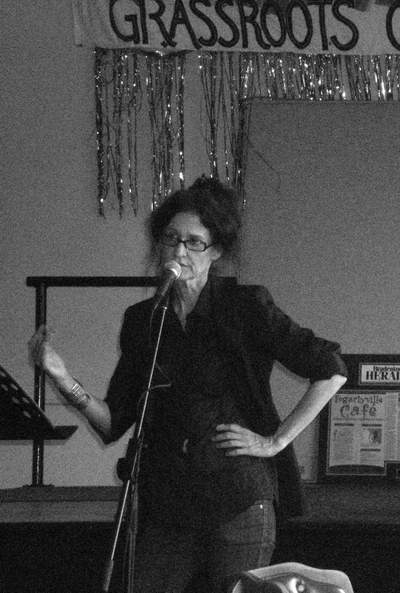
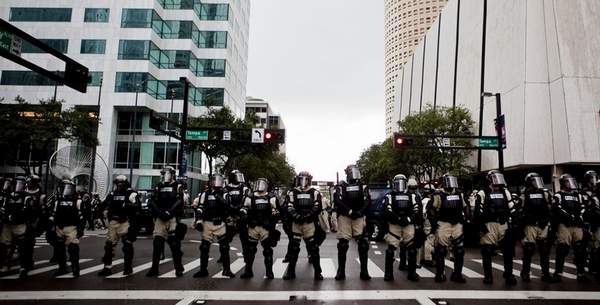
Attorney Heidi Boghosian Speech: National Special Security Events – RNC / DNC
We hear a presentation by our own Heidi Boghosian. Heidi spoke at an event sponsored by station affiliate WSLR FM 96.5 – Sarasota, Florida. As the executive director of the National Lawyers Guild, Heidi had coordinated and organized legal observers during the Republican National Convention in Tampa and the Democratic National Convention in Charlotte. While in Florida, Heidi delivered a talk about the eroding civil rights of protesters during National Special Security events, pre-event surveillance and tactical strategies deployed by police.
Heidi Boghosian is the executive director of the National Lawyers Guild, a progressive bar association established in 1937. She has published articles on policing, protest and the First Amendment including Punishing Protest and The Assault on Free Speech, Public Assembly, and Dissent (North River Press, 2004). Her book reviews have been published in The Federal Lawyer magazine and the New York Law Journal.
———
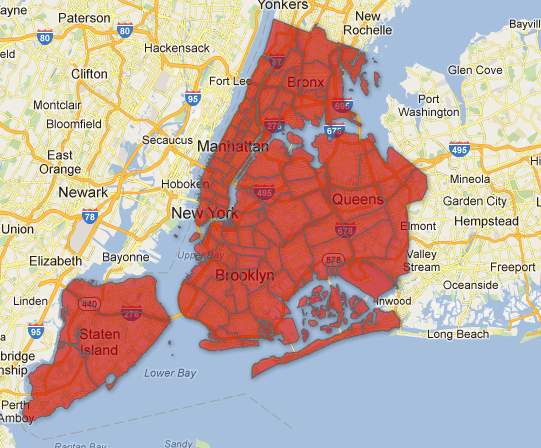
CCR Stop and Frisk Suit NYC: Floyd et al. v. New York City
Last month, a federal judge excluded portions of proposed testimony from New York City’s key witness in the Center for Constitutional Right’s Stop and Frisk class action lawsuit Floyd v. City of New York. Judge Shira A. Scheindlin of the U.S. District Court for the Southern District of New York ruled the defendants’ testimony untested and unreliable. The ruling supports that there isn’t evidence that the “Stop and Frisk” practice reduces crime.” said CCR Legal Director Vince Warren (quote) “The ruling soundly rejects the false choice propounded by the NYPD, between living in a safe city and being free of unconstitutional, racially discriminatory policing.”
In 2009 New York City, a record 576,394 people were stopped, 84 percent of whom were Black and Latino residents — although they comprise only about 26 percent and 27 percent of New York City’s total population respectively. Ten years of raw data obtained by court order from the New York City Police Department (NYPD) showed that stop-and-frisks result in a minimal yield of weapons and contraband.
Attorney Darius Charney:
- When we say “stop” were really talking about a detention of somebody’s liberty by the police. Frisk is a pat down of the outside of somebody’s clothing.
- For purposes of the 4th Amendment we are talking about a seizure when somebody is stopped, their liberty is taken away from them for a period of time and when they’re frisked, they’re searched.
- About 99.3 percent of the time the police find no gun.
- According the Supreme Court in a case they decided about 44 years ago, called Terry v. Ohio, for a police officer to stop someone on the street they have to have what’s called reasonable, articulatable suspicion.
- It has to be more than a hunch, or a whim or a subjective belief that somebody’s doing something wrong. It has to be articulatable specific facts that the officer is aware of that would cause him or her to reasonably believe that this person has committed a crime, is in the process of committing a crime or is about to commit a crime.
- If they have reasonable suspicion and they stop to ask you questions, you’re supposed to answer the questions.
- They may ask you for identification, that’s not against the law in New York state. You don’t have to provide it to them.
- You’re free to not answer but depending on what the questions are and if you don’t answer them, that may give the officer a basis to have probable cause to arrest you.
- For the officer to then put their hands on you, they have to have reasonable suspicion that you’re armed and dangerous.
- It can’t be that they think you have drugs in your pocket. Officers often get angry or irritated if you assert the rights that you have.
- What commonly happens in New York and other places is that somebody does assert their rights the officer may retaliate against them by issuing them a ticket for disorderly conduct.
- The person has a right to say “show me your badge” to a plain clothes police officer.
- Stop and Frisk has increased over 600 percent in New York City.
- In New York police are arresting 50 thousand people a year with small amounts of marijuana.
- The New York Police Department Stop and Frisk practices are literally going to be put on trial in a federal court in Manhattan this coming Spring.
- We were certified for a class action in May, so we have a website for class members. Stopandfrisk
- In order to fight crime you need to work together with the community and if the community doesn’t trust you, fear you, that’s not going to happen.
Guest – Attorney Darius Charney, senior staff attorney in the Racial Justice/Government Misconduct Docket. He is currently lead counsel on Floyd v. City of New York, a federal civil rights class action lawsuit challenging the New York Police Department’s unconstitutional and racially discriminatory stop-and-frisk practices, and Vulcan Society Inc. v. the City of New York, a Title VII class action lawsuit on behalf of African-American applicants to the New York City Fire Department which challenges the racially discriminatory hiring practices of the FDNY.
—————————-
CIA Sponsored Terror, Civil Liberties, Habeas Corpus, Human Rights, Iraq War, Military Tribunal, Prison Industry, Supreme Court, Torture
Podcast: Play in new window | Download
Updates:
- Michael Ratner: Update on Julian Assange
—-
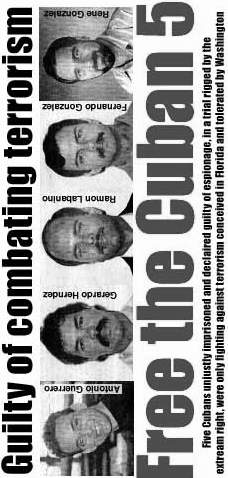
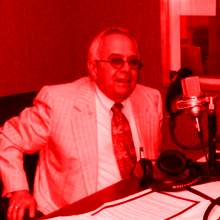
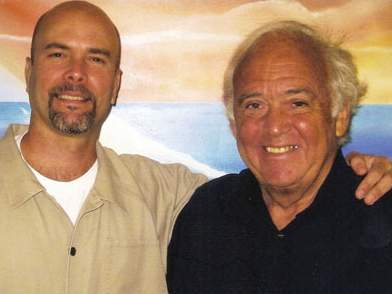
Attorney Martin Garbus and the Cuban Five
Earlier this summer we talked with renowned First Amendment and civil rights attorney Martin Garbus about joining the Cuban Five’s legal defense team. He recently filed an affidavit in the Miami Federal District Court based on US government misconduct of paying Miami journalists during the Cuban Five’s prosecution 14 years ago. As many listeners may know, these paid reporters covered the Cuban Five case in an almost hysterical fashion. The affidavit supports Cuban Five defendant Gerardo Hernández’ habeas corpus appeal and seeks the overturning of his wrongful conviction.
Attorney Martin Garbus:
- We’re saying that every person involved in the payments, the government, Radio Marti, the persons who received the payments. The journalists also violated the law.
- I think it is jury tampering. We’re saying that every dollar that was paid is a violation of the integrity of a jury trial. There were many millions of dollars.
- We’re saying that the jury trial was destroyed by a propaganda machine.
- The government then says, well you have to prove that. There are several different allegations.
- There is Radio Marti. In 1996, just about the time of the shoot down Radio Marti moves from Washington to Miami.
- It’s the only Voice of America station if you will that doesn’t operate out of Washington.
- It shows that the government was willing to give the Cuban exiles control over Radio Marti.
- In 1996, its recognized that Radio Marti is totally internal to effect the Cuban exile population in Miami.
- They then go to the newspapers, the Miami Herald, the Nuevo Herald and they (Radio Marti) start to give those journalists money.
- We filed an 80 page affidavit with hundreds of pages of exhibits.
- We’ve gone through relentlessly of payments made by Radio Marti by the government to journalists. We’ve come up with 11 journalists who have received close to a million dollars.
- The articles that they wrote should be read fairly carefully.
- They make the argument that the people who are being tried in the case were the early landing force for a Cuban invasion.
- American money is being given to writers who are then attacking America which has prosecuted people who have killed Americans. We’re trying to vacate the conviction.
Guest – Attorney Martin Garbus, one of the country’s leading trial lawyers. He has appeared before the United States Supreme Court and the highest state and federal courts in the nation. Time Magazine has named him “legendary . . . one of the best trial lawyers in the country.” He’s also known as the most prominent First Amendment lawyer.
—–


Washington DC Court Ruling on CO2
In April 2007, the US Supreme Court handed down its first decision related to climate change issues. The case was Massachusetts v. EPA and the high Court held that the Clean Air Act authorized the Environmental Protection Agency to regulate greenhouse gas emissions IF the agency determined that these emissions posed a danger to human health and welfare. The EPA did in fact make such an “endangerment” finding, and then proceeded to begin the process of adopting regulations to limit greenhouse gas emissions.
The initial lawsuit was brought by the Coalition for Responsible Regulation, which includes a range of petroleum-based industries, and supported by several states, including Texas, Alabama, Georgia, Nebraska, North Dakota, South Carolina, and Virginia. The EPA, on the other hand, was joined by California, New York, Delaware, Iowa, Maryland, Illinois, Maine, Massachusetts, New Mexico, Oregon, Vermont, Rhode Island, Washington and New York City. These three rules were challenged on various grounds – in the end the Court upheld the EPA’s action and resoundingly affirmed the agency’s authority and obligation to regulate greenhouse gas emissions.
Law Professor Eleanor Stein:
- Rolling Stone: The New Math of Green House Gas and Warming.
- Greenhouse gases are chemical substances, usually referred to a basket of six which contribute to the warming of the Earth because as they accumulate in the atmosphere they prevent the refraction of the Sun’s energy away from the Earth and back into space.
- Of these six substances the one often discussed is carbon dioxide which is the most plentiful, methane is among the most potent. Recent court case – The Coalition For Responsible Regulation Against the EPA – it was decided in the D.C. circuit a month ago.
- The Massachusetts case at the Supreme Court was about specifically regulation of emissions from new motor vehicles.
- Once the court ordered the EPA to do its endangerment investigation, it did so and made an endangerment finding in 2009. It found that greenhouse gas emissions were a danger to human health and welfare.
- The EPA was then required to regulate emissions of new motor vehicles. They did that adopting a set of rules known as the Tailpipe Rules.
- The EPA went on to adopt a set of rules for stationary sources ie, coal powerplants, those rules are known as the Timing and Tailoring Rules.
- Endangerment Finding / Tailpipe Rule / Timing and Tailoring Rule
- The current ruling of the D.C. court upholding the three rules – is a tremendous affirmation of current climate science, its a rejection of a lot of climate denial and other industry.
- The most extensive discussion is their analysis of the Endangerment Finding, which is the EPA’s analysis of the climate science.
- The Tailpipe Rule went into effect January 1, 2011. This will make a contribution to reducing emissions.
Guest – Law professor Eleanor Stein teaches a course called the Law of Climate Change: Domestic and Transnational at Albany Law School and SUNY Albany, in conjunction with the Environmental and Atmospheric Sciences Department at SUNY.
—–
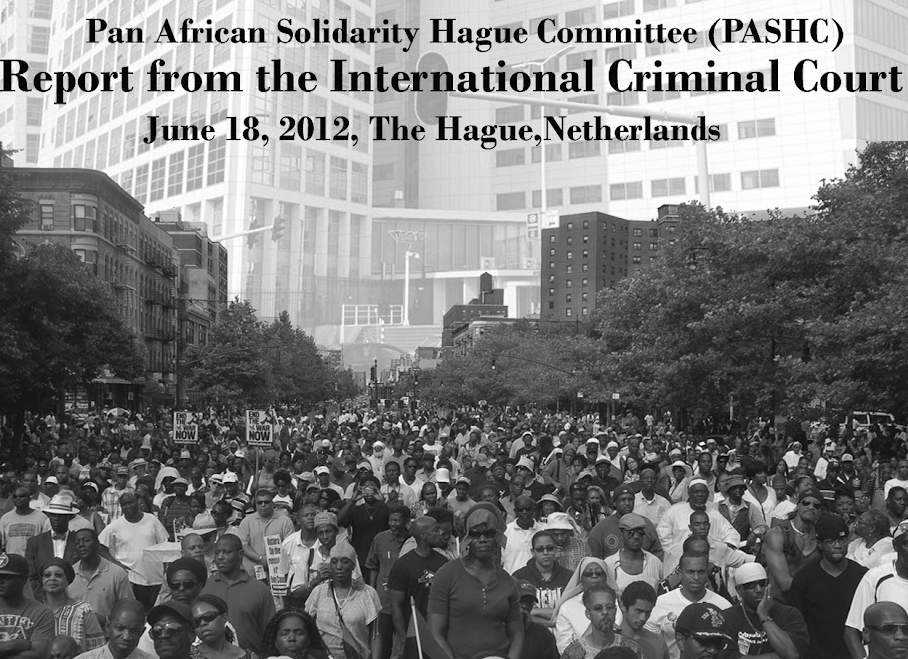
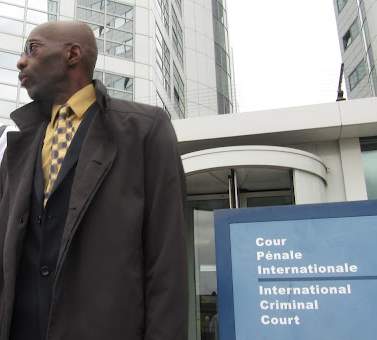
Pan African Solidarity Hague Committee Serves The ICC
In June of this year, the Pan-African Solidarity Hague Committee delivered a petition to the International Criminal Court at the Hague, Netherlands demanding they prosecute the United States, Great Britain, France, Italy, Canada, and NATO for war crimes and crimes against humanity in Libya, Cote d’lvoire, Haiti and the US. This campaign began in May of last year when thousands gathered to protest the US/NATO bombing of Libya, attacks on Zimbabwe and the racist assault against African-Americans in the United States. The evidence presented made a prima facie case of crimes committed and was the basis of the petition served this year.
Attorney Roger Wareham:
- The United States was very involved in the process of setting up the ICC.
- There are approximately 116 countries that have signed on at this point. Which means there are about one third of the countries in world who have not signed on.
- After 10 years the court came forward with its first conviction. It was a citizen of the Democratic Republic of Congo convicted of crimes against humanity.
- It’s record has been really a court to prosecute Africans.
- Of the cases that are in front of it now, all of them are Africans.
- It’s as if people who’ve violated human rights don’t exist outside the African continent.
- As one observer had said this is really an African criminal court and not an international criminal court.
- With the international criminal court, non governmental organizations can bring charges, bring communications saying we think there’s enough evidence to begin an investigation and prosecute.
- The ICC had taken out a warrant against Khaddafi saying he was a human rights violator, committed crimes against humanity, war crimes.
- In May 2011 when it was clear they were trying to effect regime change and assassinate Colonel Khadaffi we began a campaign to expose that. We saw the same pattern in terms of what happened to President Aristides in 2004.
- After the August 2011 rally we had the people’s tribunal in January 2012.
- In June 2012 we hand delivered the petition to the ICC. We asked to speak to the chief prosecutor. She declined to meet with us for some reason.
- They don’t want to deal with prosecuting anybody from the West.
- A communication was brought to the ICC for the war crimes from Operation Cast Lead. Two years later the ICC declined the petition. I think their technicality was Gaza wasn’t a state.
- There is a campaign by the West to re-colonize the African continent for its resources, to remove those heads of state that are obstacles Western re-penetration.
Guest – Attorney Roger Wareham, a member of the December 12th Movement, an organization of African people which organizes in the Black and Latino community around human rights violations, particularly police terror. Wareham is also the International Secretary-General of the International Association Against Torture (AICT), a non-governmental organization that has consultative status before the United Nations.
———————————————————————-
Civil Liberties, Criminalizing Dissent, Human Rights, Political Prisoner, Supreme Court, War Resister
Podcast: Play in new window | Download
Updates:
- Maryland Law Allows Police To Collect DNA During Arrests
- Heidi Boghosian: National Lawyers Guild Monitoring RNC / DNC Demonstrations
- In Memory: Michael Nash
- In Memory: Alexander Cockburn
- In Memory: Professor John (Tito) Gerassi
- You Have The Right To Remain Silent Booklet
———–
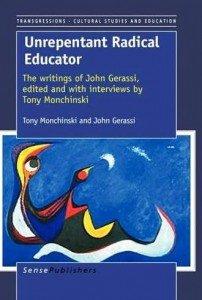
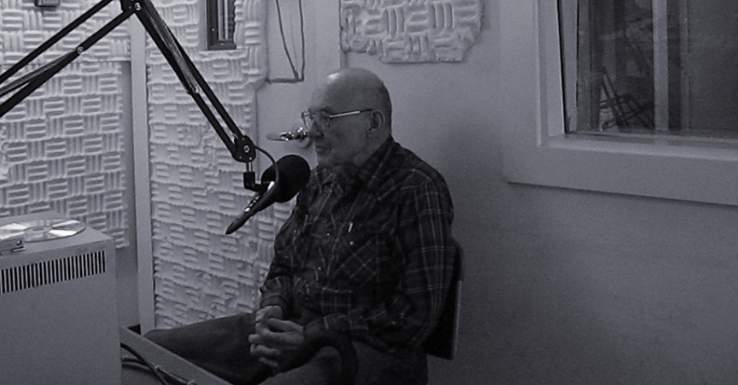
Unrepentant Radical Educator: The Writings of John Gerassi
Professor John (Tito) Gerassi, once an editor at Time magazine, then at Newsweek. He obtained his PhD at the London School of Economics and Political Science. He was a long time civil rights and anti-war militant and author / editor of ten books plus scores of articles and pamphlets published on both sides of the Atlantic. He was Professor of Political Science at the City University of New York. Professor Gerassi discussed his book, Unrepentant Radical Educator: The writings of John Gerassi, edited and with interviews by Tony Monchinski (Transgressions: Cultural Studies and Education) Indypendent Book Review
The book joins personal narratives from Gerassi’s days of journalism and activism, featuring Che Guevara, Fidel Castro, Jerry Rubin, Eldridge Cleaver and others of the era, with essays on figures such as Sartre, Camus, and Julius and Ethel Rosenberg. One review writes, (Especially fascinating are the tales of deliberate misreporting by the major media outlets for which he worked, epitomized by the words of owner Henry Luce when Gerassi was hired: “We here at Time believe that objectivity is neither feasible nor desirable.”)
John “Tito” Gerassi:
- Time Magazine: I hear you’re coming aboard Mr. Gerassi. In the long run, it was great that I got kicked out
- Met Che Guevara in Uruguay, as a journalist for the New York Times, there was a fight with anti-Castro students, the police were scared, one man fired his gun in the air, it ricocheted and hit and killed a USIS Cuban.
- Che told me I don’t talk to the imperialist press. At the hotel, they had reserved a large table where all the left-wing characters sat around with Che. Argentines say chez vous, that’s how Che got his nickname Che.
- The Great Fear in Latin America – John Gerassi
- Che Where Are You? Eventually there will be many Che’s.
Guest – Professor John Gerassi, once an editor at Time magazine, then at Newsweek, who obtained his PhD at LSE, is a long time civil rights and anti-war militant. He is the author or editor of ten books and scores of articles and pamphlets published on both sides of the Atlantic. He is currently Professor of Political Science at the City University of New York.
——————————————————
Afghanistan War, Civil Liberties, Criminalizing Dissent, Human Rights, Iraq War, Prison Industry, Supreme Court, Surveillance, Targeting Muslims, Torture, Truth to Power, War Resister
Podcast: Play in new window | Download
Updates:
————
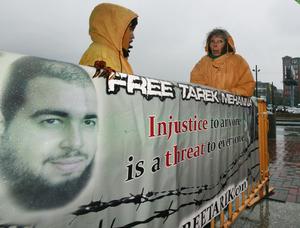
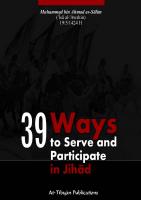
39 Ways To Limit Free Speech
39 Ways To Limit Free Speech is the title Law Professor David Cole’s recent article. Earlier this month, a 29-year old citizen from Sudbury, Massachusetts named Tarek Mehanna was sentenced to seventeen and a half years in prison for translating a document. The text he translated from Arabic is “39 Ways to Serve and Participate in Jihad” and its all over the internet, you can read it says David Cole, but don’t try to translate it. One issue in the government’s prosecution of this case is the use of the decision from the Brandenburg v. Ohio case in which the Supreme Court established that standard in ruling that the First Amendment protected a Ku Klux Klansman who made a speech to a Klan gathering advocating “revengeance” against blacks and “Jews.”
Professor David Cole:
- He was accused of providing material support to al-Qaeda by translating various documents and videos from Arabic into English. There’s no allegations that Mehanna ever met with or even talked to a member of al-Qaeda. There are no allegations that the translations were delivered to or provided to al-Qaeda which was the designated group.
- The government argued that because he translated these documents and put them up on the web and hoped to encourage people to support jihad and support al-Qaeda, that’s enough to constitute material support.
- Here’s an instant in which the government is prosecuting pure speech but no showing that the speech was connected to illegal conduct, no showing that it was intended to produce eminent lawless action, which the Supreme Court said is required to produce under Brandenburg.
- It’s enough that he put it up on the web and wanted to support al-Qaeda.
- If that’s a crime what about the New York Times when it does a report on one of the many messages Osama Bin Laden put after 9-11?
- I represented the Humanitarian Law Project in the case that went to the Supreme Court in 2010, in which the HLP was in engaging in advocacy of human rights and peace, clearly non-violent, non-criminal conduct.
- But because they wanted to do it to and with the Kurds in Turkey and particularly the political representatives of the Kurds in Turkey which is the Kurdistan Workers Party (designated as a terrorist organization) the government argued that it was a crime to teach the KWP to bring human rights claims in Geneva and work with them in peace overtures to the Turkish Government.
- The Supreme Court upheld that, but doesn’t apply to independent advocacy. (until now)
- Now if you wanted your speech to support terrorist organizations, even if you did it independently of that organization, even if you never met or talked to anyone in that organization, we can make it a crime.
- Very much about declaring a “new front” in the war on terror and the front is going after internet propaganda.
- To me it recalls the kind of aiding the enemy prosecutions we saw in World War 1.
- We as citizens need to be active in monitoring and pushing back against this material support statute.
Guest – Professor David Cole teaches constitutional law, national security, and criminal justice at Georgetown University Law Center. He is also a volunteer attorney for the Center for Constitutional Rights, the legal affairs correspondent for The Nation, a regular contributor to the New York Review of Books, and a commentator on National Public Radio’s All Things Considered. He has been published widely in law journals and the popular press, including the Yale Law Journal, California Law Review, Stanford Law Review, New York Times, Washington Post, Wall Street Journal, and Los Angeles Times.
——————-

FAA Releases Lists of Drone Certificates—Many Questions Left Unanswered
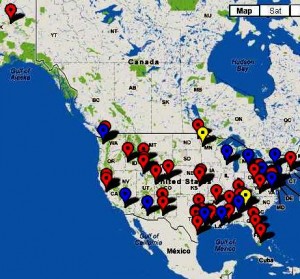
Earlier this year we discussed the partnership with Cornell University and Technion-Israel Institute of Technology. The two institutions are working together to build a campus in New York City. Technion is involved with developing robotic weapons systems, which include aerial drones, and unmanned combat vehicle technology. There are many more universities involved with drone technology. Through a series of Freedom of Information requests by the Electronic Frontier Foundation, the FAA has been forced to reveal approximately 63 active drone sites. These sites are located in 20 states and their owners include military and universities. Universities include Cornell, (which we just mentioned) the University of Colorado, Georgia Tech, Eastern Gateway Community College and many more.
Attorney Jennifer Lynch:
- We filed a FOIA request with the FAA last April asking for copies of all the certificates of authorization and the special air-worthiness certificates that the FAA issues to anybody to wants to fly a drone in the US.
- We asked for these lists which are called COAs, or Certificates of Authorization. The COAs apply to public entities like state and local law enforcement, universities, the federal government.
- We got two lists from the FAA and the FAA says these cover all of the entities that applied for an authorization to fly a drone in United States.
- They’re very interesting, the COA list includes some unsurprising entities like DARPA, DHS, Customs and Border Protection, the FBI, various branches of the military. We already knew those entities were flying drones.
- What was more surprising was the number of universities and colleges on the list.
- Universities that have an aerospace engineering program they may be seeking authorization so the students can learn about and design drones.
- The Electronic Frontier Foundation is a civil liberties non-profit, we focus on civil liberties and new technology, and we’re concerned about surveillance equipment used by the government.
- Drones are a duel use technology, they can be used for good or for bad.
- They can see inside buildings, survey an area at night with heat sensors, they also have the ability to carry communications intercept tools. You could swap out various payloads on a drone.
- Then of course these drones can carry weapons.
- You can build your own drone, DIYDrones.
- We don’t know too much about what’s going on now. The reason the EFF file the FOIA request in the first place is that we just don’t know how agencies are using these drones.
- What we found is that a lot of the police forces that have drones are required to fly them under 600 feet. If its something that flying under 600 feet you’re going to be able to see that.
- Congress was getting a lot of pressure, and the FAA was getting a lot of pressure from state and local law enforcement, the military and the federal government to authorize more drones to be used in the United States.
- We’ve heard from the Congressional Research Service that 1 in 3 warplanes right now is a drone.
- The wars are going to end and the military is going to want to something with these drones.
Guest – Jennifer Lynch, staff attorney with the Electronic Frontier Foundation and works on open government, transparency and privacy issues as part of EFF’s FOIA Litigation for Accountable Government (FLAG) Project. In addition to government transparency, Jennifer has written and spoken frequently on government surveillance programs, intelligence community misconduct, and biometrics collection. Prior to joining EFF, Jennifer was the Clinical Teaching Fellow with the Samuelson Law, Technology & Public Policy Clinic at UC Berkeley School of Law. At the Samuelson Clinic, Jennifer specialized in privacy and intellectual property issues, including investigations on social media, privacy and the smart electrical grid, digital books, and open source regimes for biotech. Before the Clinic, Jennifer practiced with Bingham McCutchen in San Francisco and clerked for Judge A. Howard Matz in the Central District of California. She earned both her undergraduate and law degrees from UC Berkeley.
—————————–