CIA Sponsored Terror, Civil Liberties, Criminalizing Dissent, Human Rights, Military Tribunal, Political Prisoner, Supreme Court
Podcast: Play in new window | Download
Updates:
——
Court Upholds Broad Injunction to Remedy FDNY Discrimination
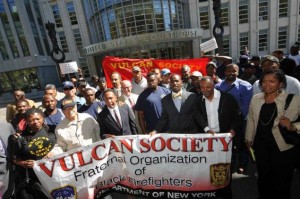
We talk today about recent developments in the New York City Fire Department discrimination case known as the US and Vulcan Society v. City of New York. Last week, a three-judge panel of the Second Circuit Court of Appeals held that, in light of the City’s “distressing pattern of limited FDNY minority hiring,” broad relief ordered by the district judge to end discrimination in the FDNY was “entirely warranted.”
This decision includes an independent monitor in order to “oversee the FDNY’s long awaited progress toward ending discrimination.” The Court also ruled that the plaintiffs’ intentional discrimination claim should proceed to a trial. The district court had found that the evidence of intentional discrimination was so overwhelming that no trial was necessary. The Court of Appeals also reinstated the plaintiffs’ claim that former FDNY Commissioner Nicholas Scoppetta is individually liable for intentional discrimination.
Attorney Dana Lossia:
- The Vulcan Society which is our client, a fraternity of black fire fighters sued the city of New York and said that the reason why the fire department back in the 60s and 70s was virtually all white was because of the hiring process that the city was using, it was discriminatory, it was unlawful.
- A federal judge agreed back in 1973 and ordered the city to hire one minority firefighter for every 3 white firefighters that was hired.
- Decades went on, we get up to the 90s and you look at the FDNY and it’s still 3 percent African American.
- It instituted the quota that was required for the bare minimum amount of time that was required and then it reverted to the all white club that the fire department has been its entire history in New York City.
- In a city that is 25 percent African American or more and 25 percent Latino.
- We made the case that not only was the city using these exams but they were continuing to use them with the knowledge and intent to perpetuate the fire department as it has existed.
- So that fathers could bring their sons and their nephews into the force and it would stay the way it had always been which is virtually all white, more than 90 percent white.
- The District Court Judge in Brooklyn agreed with us he said this was clearly intentional discrimination. He issued a remedial order requiring broad oversight of the FDNY hiring process.
- The city didn’t like that, they appealed to the Court of Appeals. The Court of Appeals came down with a decision that largely upheld this very broad and deep oversight on everything the city does to hire firefighters.
- Every other fire department in a big city across the country is more racially diverse than in New York City.
- Back in the 80s women came into the fire department and face horrible harassment and retaliation.
- One of the things we learned is that fire fighting is less dangerous than construction work, its far less dangerous job than being a police officer, a roofer.
- Fire fighters are revered wherever they go and the job is much much more safe than sanitation work.
Guest – Attorney Dana Lossia (Northwestern University, B.A., summa cum laude 2001, Harvard Law School, J.D., 2005) joined Levy Ratner in December 2005. She represents unions in New York and New Jersey in arbitrations, administrative proceedings, NLRB cases and federal and state court litigation. She also represents plaintiffs in complex employment discrimination actions, including a challenge to racially discriminatory hiring practices at the NYC Fire Department. Lossia has also litigated on behalf of tenants in land use and zoning appeals before the NYC Board of Standards and Appeals.
—-
Lawyers You’ll Like: Anne O’Berry
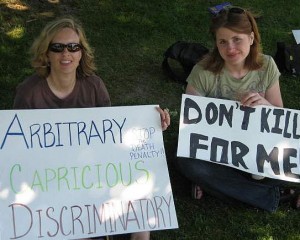
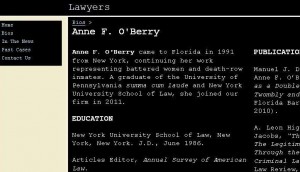
As part of our Lawyers You’ll Like series we’re joined by attorney Anne O’Berry, she’s the Vice President of the Southern Region of the National Lawyers Guild and the author of The Law Only As An Enemy: The Legitimization of Racial Powerlessness Through the Colonial and Antebellum Criminal Laws of Virginia. While in law school, she served as Director of the Women in Prison Project at Rikers Island, where she taught incarcerated women how to prevent termination of their parental rights. In the last 12 years, Anne has served as counsel at a Florida law firm that specializes in class action litigation, particularly in the areas of securities, consumer and economic fraud, as well as some environmental and privacy rights litigation.
Attorney Anne O’Berry:
- We did a lot of historical research in terms of racism and the law back in pre-civil war Virginia.
- We focused on Virginia because it was a paradigm for slavery basically in the slave laws that were in place.
- We wrote an article for publication, it was published in the University of North Carolina law review. The Law Only As An Enemy:’ The Legitimization of Racial Powerlessness Through the Colonial and Antebellum Criminal Laws of Virginia.
- Depending on your status, if you were a free white person or a slave, you were treated differently by the law.
- As an overall theme, depending on the race of the victim was that would effect what your sentence would be.
- For example, if a black woman was raped, that was not considered a crime. If you were a black person and you stole something, you would be put to death.
- It was ironic for the slave owner because if their slave was put to death, they would have to be compensated by the state.
- If the victim was black, the crime was treated less seriously than if the victim was white.
- I started out working at a firm in New York, a large prominent, Wall Street type.
- Among some people I was known as the pro-bono queen.
- I was there for 2 and a half years and the first pro-bono case was a death penalty case.
- The court ruled back then (1990s) that it was ok to execute the mentally retarded.
- I was so moved by that experience that I gave up my cushy job in New York and go do death penalty work full time.
- I ended up at the Federal Resource Center doing death penalty work in Tallahassee Florida.
- I worked for the Battered Women’s Clemency Project in Florida.
- More recently the Supreme Court did rule that it is unconstitutional to execute people who were juveniles at the time of the offense and unconstitutional to execute people who are mentally retarded.
- I believe in my lifetime we will see the end of the death penalty in this country.
- It’s just an amazing system that we have where the courts will say – yes you’ve got compelling evidence of innocence but we’re not going to hear your case.
- I would say what got me through was the victories.
- Presently, I’m working with an attorney Jim Green, who’s a prominent civil rights attorney in West Palm Beach, kind of a legend down here.
- I also some volunteer work with El Sol. It’s a day laborer center in Jupiter, Florida.
Guest – Anne O’Berry, National Lawyers Guild’s Regional Vice President for the Southern Region and a member of the Guild’s South Florida chapter. She obtained her undergraduate degree from the University of Pennsylvania in 1983 and her law degree from New York University Law School in 1986. While in law school, she served as Director of the Women in Prison Project at Rikers Island, where she taught incarcerated women how to prevent termination of their parental rights. She was a member of the law school’s civil rights clinic and an editor on one of the law school’s journals, and authored a law review article on prisoners’ rights.
—
Guatemalan Ex Dictator Found Guilty of Genocide
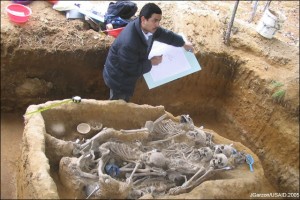
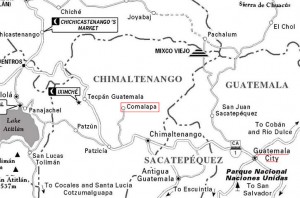
After weeks of powerful testimony the trial of former Guatemalan dictator Efraín Ríos Montt and his intelligence chief José Rodríguez Sánchez ended with a guilty conviction on charges of genocide and crimes against humanity. The verdict marked the first time a former head of state had been found guilty of genocide in his or her own country.The government’s lead prosecutor, Orlando López, gave more than two hours of summation based heavily on the Guatemalan military plans, manuals, and operational records entered as evidence. During the months of General Ríos Montt’s rule, the army used a scorched-earth policy to flush out leftist guerrillas fighting in the hills. The villages of the Mayan highlands suffered the worst of the army’s brutality in the early 1980s, during Guatemala’s 36-year civil war.
Kate Doyle:
- I’m one of a couple of analysts that look at foreign policy in Latin America. My specialty is Central America and Mexico and I’m the director of something called the Evidence Project at the Archive, which is a way of connecting the right to information, right the truth with human rights and justice struggles around the region.
- We’ve worked very closely with truth commissions, with prosecutors and judges to try to get some of the classified US documents and sometimes even the national documents from their countries in to their hands when they’ve got a human rights investigation underway.
- The impetus for this case really came from the affected communities themselves that is in this case, the community of the Mayan Ixil.
- In the Northwestern part of the country, which worked for decades to identify exhumation sites. Sites where they knew there were clandestine mass graves of their own mothers, fathers, children who had massacred during the scorched earth operations of Rios Montt in 1982 and 1983.
- In March of 1982, Rios Montt headed a trio of military officers that overthrew the previous president. There was a guerrilla armed insurgency underway in Guatemala and had been since the 1960s. Rios Montt decided he was going to launch a series of counterinsurgency operations not only to target the armed insurgents in the highlands but also to destroy or eliminate their social base.
- That meant going after communities of mostly Mayan peoples that lived in the same area where the insurgents operated. It’s one of the most brutal acts of what used to be called low intensity warfare.
- The officials that carried out those operations were left to enjoy total impunity after the regime ended some 17 months later.
- Prosecutors and both the government prosecutors and civil prosecutors who represent the victims who also get to sit at the table ask questions and participate in the investigation pulled together a real interesting case for genocide and crimes against humanity.
- I’ve been working with those prosecutors for years to help them incorporate both declassified US documents as evidence in the case but also those Guatemalan military archives.
- Because of the very tight relationship between the United States and the Guatemalan regime of Rios Montt and predecessor regimes, we knew these agencies would have countless records of the operations themselves of the Guatemalan military structure of command and control.
- Some of the most extraordinary testimony for me came from women because the Guatemalan military like many militaries in these irregular wars used sexual abuse and violation as a part of their counterinsurgency tactics and they actually talk about the destruction of the “semia” the seed.
- The day the verdict came down, the court that seats about 500 people, was absolutely packed to the gills, so every seat was full. When the mood in the room began to feel tense, because of the intensity of the verdict and what that meant for Guatemala. Everybody began to stand up and sing this beautiful song, this poem that was set to music by a Guatemalan musician, over and over again and brought the tension down slowly slowly, it was one of the most beautiful moments I’ve ever witnessed in a court room.
- The Guatemalans were focused on legally convicting the authors of genocide, and they did it.
Guest – Kate Doyle, a Senior Analyst of U.S. policy in Latin America at the National Security Archive. She directs several major research projects, including the Guatemala Project, which collects declassified U.S. and Guatemalan government documents on the countries’ shared history from 1954, and the Evidence Project, connecting the right to truth and access to information with human rights and justice struggles in Latin America. Since 1992, Doyle has worked with Latin American human rights groups, truth commissions, prosecutors and judges to obtain government files from secret archives that shed light on state violence. She has testified as an expert witness in numerous human rights legal proceedings, including the 2008 trial of former President Alberto Fujimori of Peru for his role in overseeing military death squads; the case before the Spanish National Court on the 1989 assassination of the Jesuit priests in El Salvador; and the 2010 trial of two former policemen in Guatemala for the forced disappearance of labor leader Edgar Fernando García in 1984
———————————————————
Civil Liberties, Criminalizing Dissent, FBI Intrusion, Habeas Corpus, Human Rights, Political Prisoner, Prison Industry, Supreme Court, Torture, Truth to Power
Podcast: Play in new window | Download
Updates:
—
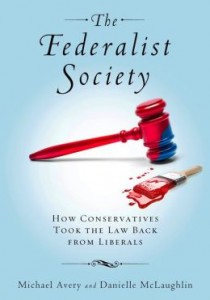

The Federalist Society: How Conservatives Took the Law Back from Liberals
Has the Department of Justice been taken over by a conservative organization little known to the average citizen? In the recently published book titled The Federalist Society: How Conservatives Took the Law Back from Liberals authored by attorney Michael Avery and Danielle McLaughlin track the movements of a small group of conservative law students and their influence. The Federalist Society has lawyer chapters in every major city in the United States and student chapters in every accredited law school. Members include economic conservatives, social conservatives, Christian conservatives, and libertarians. They all differ with each other on significant issues, but cooperate in advancing a broad conservative agenda.
Attorney Michael Avery:
- I saw how much power and influence the Federalist Society had during the years George W. Bush was president and at the same time I realized most people don’t know very much about them.
- They remained under the radar, I thought it was important to tell their story.
- They came along just at the right time for them, it was really kind of a perfect storm for them. Ronald Reagan was in the White House, you had a general renaissance of conservative thought that was promoted by people like Bill Buckley in the National Review, you had resistance to school integration and forced bussing. So there was a backlash waiting to happen against some of the things that happened in the law.
- It’s very important to recognize the role Ed Meese played. First he was counselor to the president then he was attorney general, later he became a principle figure at the Heritage Society.
- Many people are open members of the Federalist Society, others not so much but through a variety of sources I think we’re very confident that the people in that appendix either are members or very close to the society and sometimes I call that list the 100 most powerful people in the country and most of them you never heard of.
- About half the members that George W. Bush appointed to the Federal Court of Appeals were members of the Federalist Society.
- This battle over whether the government is able regulate private property has been one of the principle ideological battles of American Constitutional law since the end of the 19th century.
- They argue that property rights are a natural right that everybody is entitled to.
- It’s better to tolerate disagreement than to try to be 100 percent correct all the time.
Attorney Danielle McLaughlin:
- The substantive areas of law that we’re seeing this test cases brought in are very much reflective of the core values of the society. Those are notions of small government in particular small federal government. The idea that the state exists to preserve freedom.
- Many are involved in public interest law firms who go out and find plaintiffs and challenge regulation at the state level and in many cases have been successful in challenging laws in opposition to their world view all the way up to the Supreme Court.
- They really worked this very large network that they developed.
- Olen Foundation says here’s some money go out and build an institution.
- The Federalist Society today is not handicapped by having to report back or meet short term goals. The conservative funders believed in long term institution building.
- There are Federalist Society student groups on the campus of every single accredited and some unaccredited law schools. There are lawyer chapters in every single major city. There are affiliated Federalist Society groups outside the country.
Guest – Civil rights lawyer Michael Avery, professor at Suffolk University Law School and former president of the National Lawyers Guild from 2003 to 2006.
Guest – Co-author and attorney Danielle McLauglin, member of the Litigation and Dispute resolution group.
—–
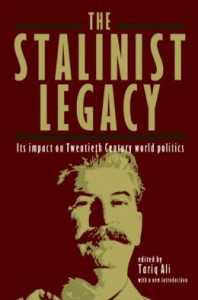
The Stalinist Legacy: Its Impact on Twentieth Century World Politics
We go now to hear a presentation by internationally acclaimed Pakistani writer and film maker Tariq Ali during a New York City book launch of his new book The Stalinist Legacy: Its Impact on Twentieth Century World Politics. Karl Marx’s often quoted observation “History weighs like a nightmare on the brain of the living” is so true. Even 20 years after the Soviet Union’s collapse, activists are still confronted by the legacy of Stalinism at the same time capitalism has failed millions of working people in the United States and across the world.
————–
CIA Sponsored Terror, Civil Liberties, Criminalizing Dissent, Extraordinary Rendition, Habeas Corpus, Human Rights, Political Prisoner, Prison Industry, Prosecution of the Bush Administration, Supreme Court, Targeting Muslims, Torture, War Resister
Podcast: Play in new window | Download
Updates:
- Please Sign the Lynne Stewart Compassionate Release Petition
- Please Also Write to: Charles E Samuels Jr. / Federal Bureau of Prisons /
- 320 1st Street Northwest / Washington DC 20534
- Anniversary of Collateral Damage Video Release
- University Stadium Victory – GeoCorp Prisons
—
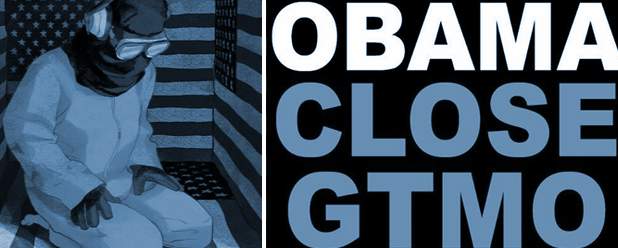
Guantanamo Hunger Strike Update
Attorney Omar Farah speaks with Michael Ratner about a hunger strike at Guantanamo Bay Prison with more than half of prisoners from Camp 5 and 6f participating. Farah says the hunger strike was triggered by an arbitrary crackdown by the prison administration including cell searches and a search of the prisoner’s Qurans. This is viewed as out right desecration. More than half of the entire prison population has been cleared for release by every prominent national security and law enforcement agency in the US government, that includes the DOD, DHS.
Guest – Omar Farah joined the Center for Constitutional Rights in 2012 as a staff attorney in the Guantanamo Global Justice Initiative. Omar was previously in private practice, working mostly in the area of international commercial arbitration. Since 2008, he has represented several prisoners detained at Guantanamo Bay in habeas corpus litigation in federal court.
———
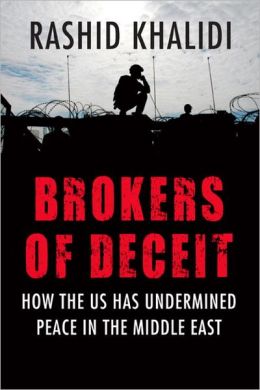
Brokers of Deceit: How the U.S. Has Undermined Peace in the Middle East
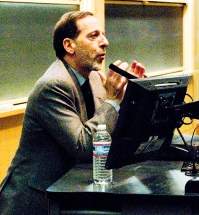
While adviser to the Madrid and Washington Palestinian-Israeli negotiations, author and historian Rashid Khalidi collected documents, memos and meeting minutes as a research foundation for his recently published book Brokers of Deceit: How the U.S. Has Undermined Peace in the Middle East. The book focuses on 3 periods of opportunity for the United States to broker peace, one in the late seventies, the early nineties and 2010. This critical analysis addresses the basic distortions in language that has corrupted the peace processes. Rashid Khalidi is an American historian of the Middle East, the Edward Said Professor of Modern Arab Studies at Columbia University, and director of the Middle East Institute of Columbia’s School of International and Public Affairs, he joins us today to talk about his book and also the ongoing destabilizing hostility in Syria.
Professor Rashid Khalidi:
- Let me read to you what Orwell says, “the slovenliness of our language makes it easier for us to have foolish thoughts. If thought corrupts language, language can also corrupt thought. Bad usage can spread by tradition and imitation even by people who should and do know better.”
- The argument I’m making in this book is much of the language used by pundits and politicians about the Middle East and the so called peace process, between the Palestinians and the Israelis is really corrupt language.
- One of the chapters in the book is devoted to the period when I was an adviser to the Palestinian delegation and negotiations from 1991-1993 starting in Madrid and continuing to Washington.
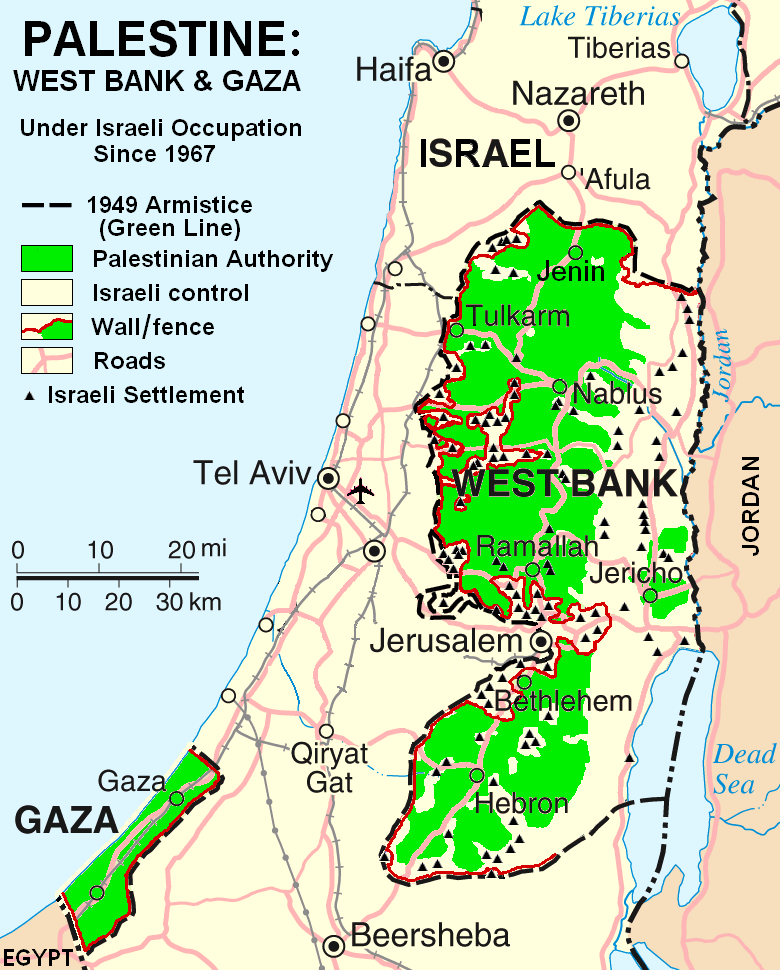
- If you go back to Madrid in October 1991, there were under 200 thousand Israelis living in the occupied West Bank and occupied East Jerusalem. Today, there are nearly 600 thousand of them.
- United States has been responsible for exacerbating the problem in effect by saying the only way to deal with this issue of occupation and settlement is through negotiations mediated by us.
- The United States in the meantime has put its big thumb on the scale in favor of the Israelis preventing a resolution of the problems.
- The first episode I talk about in the book has to do with the follow on to Camp David in the wake of the Lebanon War in 1982 when Israel invaded and 50 thousand Palestinians and Lebanese were killed and wounded.
- I site at great length a now declassified document by a CIA analyst which one of my students actually found.
- The idea of Palestinian self determination doesn’t exist anywhere in the Oslo Accords signed by the PLO and Israel in 1993 and afterward.
- Autonomy and self determination are used by people in American political parlance and Israeli political parlance in ways that do violence to the real meanings of these words.
- Obama fits the pattern of every president since President Carter, with the sole exception of George W. Bush.
- Obama has adopted wholesale and entire Israeli narrative as to the idea that Israel is the victim.
- There is a people in existential danger that’s the Palestinians, the people faced with elimination, extermination, not physically but as a collective.
- Oslo was a terrible deal for the Palestinians. As a result of Palestinian failures since the 90s, a situation has emerged where we have one state and one sovereign body between the Mediterranean and the Jordan River.
Guest – Professor Rashid Khalidi, is the Edward Said Professor of Arab Studies at Columbia University. He received his B.A. from Yale University in 1970, and his D.Phil. from Oxford in 1974. He is editor of the Journal of Palestine Studies, and was President of the Middle East Studies Association, and an advisor to the Palestinian delegation to the Madrid and Washington Arab-Israeli peace negotiations from October 1991 until June 1993.
—–
Judge Oks Civilians Right to Sue Military For Spying On Peace Activists
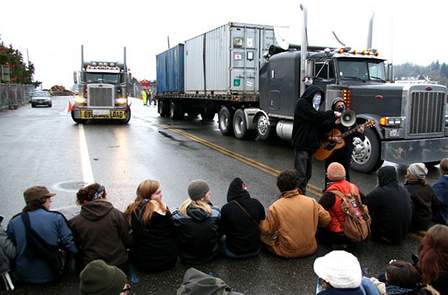
In a recent ruling, the Ninth Circuit Court of Appeals ruled that a lawyer’s challenge to military spying on peace activists can proceed. This ruling is the first time a court allowed civilians to sue the military for violating their First and Fourth Amendment rights. National Lawyers Guild attorney Larry Hildes brought the lawsuit Panagacos v Towery in 2009 on behalf of a group of Washington state antiwar activists who discovered they were infiltrated for 2 years by John Towery, an employee at a fusion center inside a local Army base. The antiwar activists group Port Militarization Resistance sought to oppose the wars in Iraq and Afghanistan through civil disobedience. The lawsuit also names, the Army, Navy, Air Force, FBI, CIA, Department of Homeland Security and other law enforcement agencies.
Attorney Larry Hildes:
- Brendan Dunn was activist in Olympia, he was arrested in Seattle basically for sitting while anarchist.
- The Olympia Police Department cracked down on the Wobblies and the IWW for having newspaper boxes for which they paid for and took all the papers.
- We got them back, but Brendan got curious about what was going on, did a state public records act request for all emails and all intelligence to the city of Olympia concerning anarchists or the IWW.
- What he got back instead was hundreds and hundreds of pages of what are called “force protection memos” and “threat assessments” from Ft. Lewis about Port Militarization Resistance, a group that he was involved with that did protest against the use of public ports for shipment of Striker Brigade equipment to the occupation in Iraq and Afghanistan.
- He started looking at them and every police department and every military agency from north of Seattle to Portland was on this list. The FBI was on this list, Homeland Security, every branch of the military.
- It was detailed discussions of what PMR was planning, what they were going to do, how to fight it. The author of a lot of this was John Towery.
- PMR looked Towery up on Facebook and there’s a picture on Towery’s FB page of John Jacob who had been coming to PMR meetings for several years. Very closely involved with PMR in fact he ran their list serve on Rise Up.
- So they did some more checking. They looked up his voter registration, they got an address and the address matched John Jacobs.
- He was 20 years older than everyone else. I don’t know how but he blended in. He went to events, he brought his kids. He was very very good at what he did.
- Brendan considered him a close friend. Brendan and another member confronted him at a cafe in Tacoma and he said “yes, I’ve been spying on you. I’m doing it for your own good, there are other spies watching you that mean you much more harm than I do.”
- We do know that the Army at least one more spy. We caught the Coast Guard spy. There were 2 officers from the Tacoma Police Department’s Homeland Security Committee.
- The police would show up at unannounced demonstrations. The MP’s, local police and state patrols would already be there and everyone would be arrested as they were getting out of their cars.
- The Portland Militarization Resistance was a few dozen people. They were very creative, they had figured out a choke point for the military.
- The equipment would go out 3 weeks before the troops. If they couldn’t get the equipment there. They couldn’t send the troops.
- If they couldn’t send the equipment and the troops then no war.
- The succeeded in scaring the heck out of the military by these very peaceful acts of civil disobediance.
- They can’t arrest them before they get to the demonstration or before they even do anything.
- They think dissent against their wars is the enemy which scares me a great deal.
- Where else are they doing this, how much are they doing this?
Guest – Attorney Larry Hildes, an NLG member and one of the attorneys involved in bringing the case Panagacos v Towery.
————————————————————————–
Civil Liberties, Cuba, Human Rights, Supreme Court, Truth to Power
Podcast: Play in new window | Download
Updates:
- MOMA Suggested Donation Lawsuit
—-

Michael Smith and Dennis James Discuss Cuba Trip
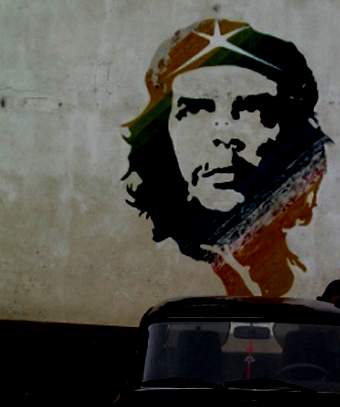
Co-host Michael Smith and attorney Dennis James recently returned from Cuba on a trip led by the Center for Cuban Studies. Dennis is a civil rights lawyer formerly of Detroit and former Executive Director of the National Lawyers Guild. The trip was undertaken to appreciate the fundamental changes now going on in Cuban law with respect to travel, home, car and business ownership. The discussion leads into the possibilities of an economic rejuvenation in Cuba.
Attorney Dennis James:
- The people of Cuba had a strong identification with the revolution they made.
- Cuba is theirs and nobody else is going to tell them how to run it.
- They have a lot of complaints about shortages, but they’re very appreciative of the basic needs of life that are provided for.
- The Cuban government did a thorough and multi-level canvassing of the population through its national assembly and committees for the defense of the revolution.
- Talking to the people on the street, they remember this process that went on.
- The government watches which enterprises make sense, which ones are succeeding.
- The ones that are succeeding and paying taxes, employing people are encouraged.
- Book: The Man Who Loved Dogs
- Book: Cuba, What Everyone Needs To Know – Julia Sweig
- There’s a colony of people in Melia Cuba that practice what they call naive art.
- I think its naive in the sense that it’s self taught.
- They do wonderful paintings, these are doctors, lawyers, bakers, bus driver, cops, sugar mill workers.
- Their work is encouraged, given exhibits in Havana.
- Sandy Levinson – The Center for Cuban Studies.
- We’re not talking about the flag waving, hammer and sickle brandishing socialist realism of China and Russia, we’re talking about wonderful expressions of culture.
Guest – Dennis James, a civil rights lawyer formerly of Detroit and former Executive Director of the National Lawyers Guild.
——–
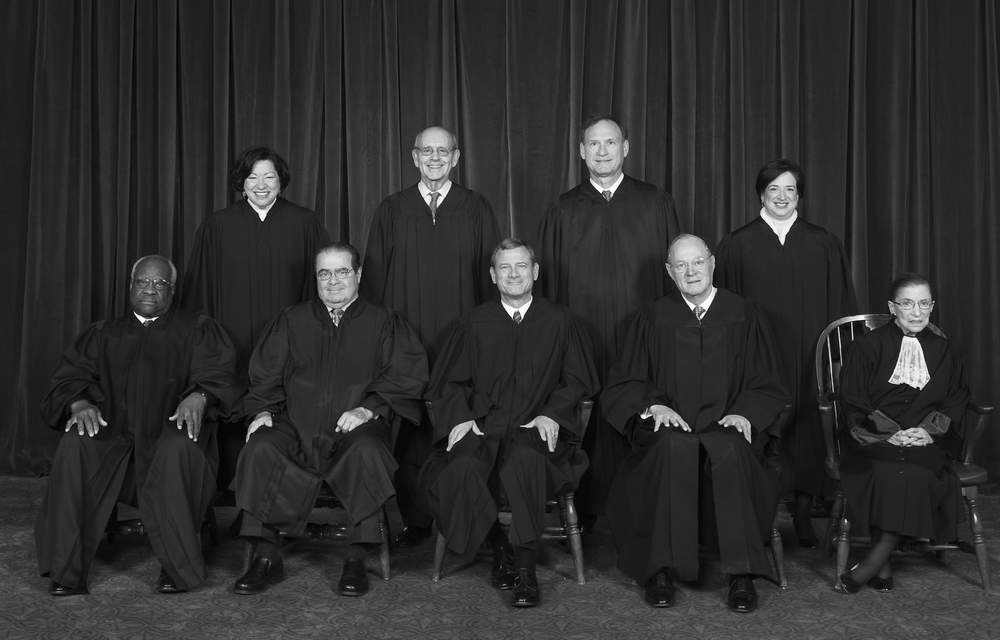
Supreme Court On Gay Marriage
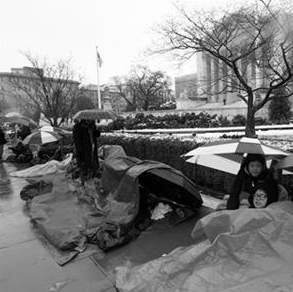
Last week the Supreme Court heard oral arguments on two historic cases that could establish the constitutional right for gay marriage. The first case, Hollingsworth v. Perry is a challenge to California’s voter-approved ban of same-sex unions in 2008. Six months after the California Supreme Court endorsed gay marriage, voters passed Proposition 8 which amended the state’s constitution to only recognize marriages between a man and a woman. Lower courts had declared the gay marriage ban to be unconstitutional. The second case the Supreme Court heard was a challenge to the 1996 Defense of Marriage Act. This act bars married gay couples from receiving federal marriage benefits such as Social Security and family medical leave.
Professor Katherine Franke:
- On the Prop 8 case, I would certainly question the issue of standing which the court is from their argument also taking quite seriously.
- It’s actually an incredibly important issue in civil rights law where groups of people want to assert an interest in an overarching public issue like the right to marry.
- I’m of the view that this should never have been brought.
- The movement lawyers really argued for Boise and Olsen not to bring the case. Boise and Olsen lobbied quite hard to keep the movement lawyers out of the case.
- When the law gets out ahead, and the lawyers get out ahead of the movement that support them, often we do more damage than good when we get to the Supreme Court too soon.
- We have movement lawyers in the lesbian and gay community and of course they don’t all agree with each other, its a complicated movement. But there was a sense that they were going to go state by state, and build legal consensus around the issue of marriage rights and around a set of arguments that weren’t going to hurt gay and lesbian people who didn’t marry.
- Boise and Olsen thought they would do a better job raising the issue of marriage than the movement lawyers have. They’re carrying a brief for marriage, not a community who have a diverse set of interests, marriage being only one of them.
- DOMA, the Defense of Marriage Act is a law that unfortunately President Clinton signed in 1996. It was basically a homophobic cry from the Congress to limit on the federal level any definition of a marriage to between a man and a woman.
- If you’re a federal employee, if you’re married you can put your spouse and dependent children on you health insurance.
- If you’re not married, you can’t.
- Edie Windsor is the plaintiff in the DOMA case but when her partner of many many years past away, Edie inherited under the will, her partner’s property they jointly owned together. Under federal tax law it says if they were strangers to one another, so Edie had to pay about 360 thousand dollars in inheritance taxes for the property she had owned with her partner.
- There was a coalition of large corporations that filed a brief and said actually
- The political alignment on this issue has really shifted at a rapid pace in the last year.
- I direct our center on gender and sexuality law.
- I’m actually now teaching for the first time a class on the law of occupation so we’re looking at Iraq and Palestine and the United States, Puerto Rico and Hawaii. To understand whether the law can be a force for good when military force is like the Israelis or like the Americans occupying other sovereign states.
- We’ve got a really great new project engaging tradition and thinking about arguments based in tradition, that have been used traditionally to undermine sexually based justice claims.
- Those issues come up in the marriage context all over the place.
Guest – Professor Katherine Franke, the Isidor and Seville Sulzbacher Professor of Law; Director, Center for Gender and Sexuality Law at Columbia Law School.
—————————————————————–
Civil Liberties, Criminalizing Dissent, FBI Intrusion, Habeas Corpus, Human Rights, Political Prisoner, Prison Industry, Supreme Court, Surveillance, Torture
Podcast: Play in new window | Download
Updates:
—-
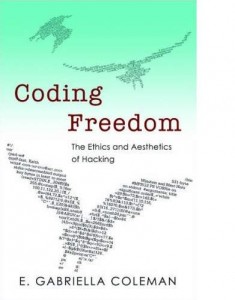
Coding Freedom: The Ethics and Aesthetics of Hacking
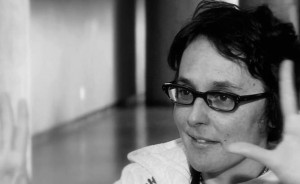
In the past 2 years, we’ve discussed in many interviews and updates, the attacks on whistle-blowers and hackers. The emerging movement of programmers, hackers, open source software, online communities has challenged and exposed corporate and government control and surveillance, making them targets of prosecution. As many may know, our own Michael Ratner has represented whistle-blower Julian Assange, computer activist Jeremy Hammond, and has been a legal adviser to many others including the late Aaron Swartz. Today we talk with author Gabriella Coleman about her recently published book Encoding Freedom: The Ethics and Aesthetics of Hacking. It’s a good place to start for those learning about the political significance of free software, intellectual property and the morality of computer hacking.
Gabriella Coleman:
- When you utter the word hacker, usually the image that pops into people’s minds is nefarious criminal. That can be the case but really hackers are composed of an extremely lively group of individuals who tend to be computer programmers and network administrators, who actually are committed to a range of civil liberties such as free speech and privacy. Especially in the last decade they’ve been involved in political activities as well.
- They’re quite a bit of diversity among hackers, technically.
- Hackers – are keenly aware of the issues such as censorship, which impact the present and the future of the internet. Some hackers are committed to insuring internet freedoms for their own productive autonomy.
- Beyond productive autonomy they’re really starting to care about the broader issues relating to internet freedoms and how they relate to democracy at large.
- In order for software to be made, it must be written in a programming language such as C++, Python and Pearl and its written in source code. These are the underlying directions of software.
- A very prominent group of hackers who are committed to always having access to source code have actually reinvented the law to make sure that that source code is eternally available. They’re very much against copyrights and patents and have created something called a copyleft to make sure the source code that powers software is always accessible to them.
- Proprietary software such as the Microsoft Operating System is behind lock and key. We don’t have access to the underlying directions.
- There’s a contingent within the hacker world who believe that access is not only good for the sake of improving technology but is the morally right thing to do.
- That its a collaborative process, that everyone should have access to it. There are other hackers that are a little less concerned about the ethics of access and they’re more concerned about the pragmatics.
- I originally thought that these free software developers who were part of these large projects such as Debion, were raging Leftists. The project itself had collected people from all political orientations.
- Anonymous is a digital phenomena somewhat composed of hackers but not exclusively so, who has engaged in an enormous amount of political activities. They are innovating in the realm of direct action related to digital protest.
- Some will engage in hacking to get information about corporate corruption to leak to the world at large. They also engage in distributed denial of service attacks where a website is so overloaded with requests it comes off line.
- Free software, in order for it to be free speech is also like free beer, you have to make the source code available. But that doesn’t stop people from charging money for support or services.
- In the case of SOPA being passed, there was massive outcry, and massive organization to do something about it to stop it in its tracks. It came from different quarters of society, it came from corporate giants such as google, it came from the Electronic Frontier Foundation, and there was a huge black out where people took down their websites. It had a massive effect and stopped it in its tracks.
- I’m currently working on a book on Anonymous. That should be definitely done by 2013.
Guest – Gabriella Coleman, Wolfe Chair in Scientific and Technological Literacy in the Art History and Communication Studies Department at McGill University. Trained as an anthropologist, she researches, writes, and teaches on hackers and digital activism. Her first book on Free Software, “Coding Freedom: The Aesthetics and the Ethics of Hacking” has been published with Princeton University Press. It is available for purchase and you can download a copy on here.
—-
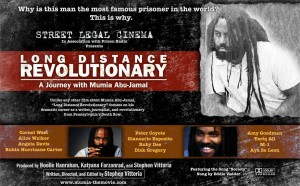
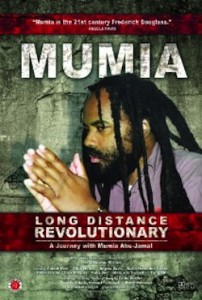
Long Distance Revolutionary: A Journey with Mumia Abu-Jamal
The new documentary, “Long Distance Revolutionary: A Journey with Mumia Abu-Jamal,” is premiering across the country. The film includes interviews from Cornel West, Alice Walker, Ruby Dee, Dick Gregory, Amy Goodman, Michael Parenti, writers Tariq Ali, and Michelle Alexander. This film beautifully captures the importance of Mumia Abu-Jamal’s life as an American journalist, and radical. He published seven books in prison including the best selling “Live From Death Row.”
In Chris Hedges’ review he points out what Cornel West says in the film: “The state is very clever in terms of keeping track, especially [of] the courageous and visionary ones, the ones that are long-distance runners. You can keep track of them, absorb ’em, dilute ’em, or outright kill ’em—you don’t have to worry about opposition to ’em.”
Steve Vittoria:
- The arc of Mumia’s life and the body of his work which is remarkable under harsh and draconian conditions is much more than December 9, 1981. I’ve always seen his life as more than one moment.
- I wanted to tap into what I found was clearly a unique story. Here’s a young man who early on realized he was a revolutionary by the time he was 15 years old.
- He’s writing remarkable work for the Black Panther Party and their newspaper. By 26, he’s a vibrant radio broadcaster and journalist in Philadelphia, reaches NPR and All Things Considered.
- After incarceration, he publishes 7 or 8 books.
- I did from a creative standpoint and a very practical standpoint.
- I wanted to tell a really good story. Any filmmaker, that’s job number one. Mumia, you just have to turn the camera on and you can tell a great story.
- If the film starts to win awards and get fawned over then something’s wrong.
- My favorite interview in the film is Mumia’s sister Lydia Barashango who unfortunately passed away a few months after we interviewed her from her bout with cancer. She went to great lengths to secure her baby brother’s legacy.
- Trying to find what it was like as a young African-American kid growing up in one of the great racist northern cities of Philadelphia, what it was like
- I didn’t realize how funny he could be. He’s kind of a science fiction nerd. He calls himself a nerd.
- Mumia has a very strict schedule for work.
Guest – Steve Vittoria, the writer, director, producer and editor of Long Distance Revolutionary: A Journey with Mumia Abu-Jamal. The film premiered in theaters in New York City earlier this month.
—————————————
CIA Sponsored Terror, Civil Liberties, Criminalizing Dissent, FBI Intrusion, Green Scare, Habeas Corpus, Human Rights, Political Prisoner, Prison Industry, Supreme Court, Targeting Muslims, Truth to Power
Podcast: Play in new window | Download
Updates:
- Chile: 40 Years Later Eight Former Army Lieutenants Charged in the Killing of Communist Performer/Songwriter Victor Jara.
- Heidi Boghosian and Johanna Fernandez Visit Mumia Abu-Jamal During Holidays
- Death Penalty States In The United States Update
- Jeremy Hammond’s Judge Refuses To Recuse Herself : Contrary to what has been reported on Democracy Now and Law and Disorder, a motion has been filed (not ruled) for the judge to recuse herself.
——-
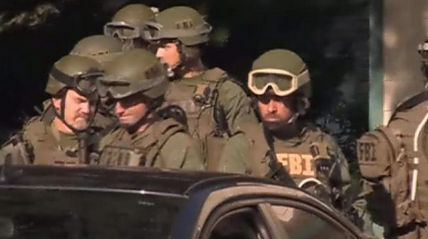
FBI Considers The Occupy Movement A Terrorist Threat: The State of Civil Rights and Public Policy
A few weeks ago the Partnership for Civil Justice Fund released secret documents obtained by Freedom of Information Act requests revealing that the Occupy movement was treated as a terrorist threat by the FBI. This is despite agency acknowledgement that the organizers called for peaceful protests. The documents also show massive resources used to track the Occupy movement, a month prior to the encampment in Zuccotti Park. FBI and counter-terrorism agents in offices across the country, from Anchorage to Jacksonville, to Tampa, Virginia, Milwaukee, Birmingham, Memphis and Denver, coordinated with various local and federal law enforcement, to monitor and collect intelligence on OWS. The documents obtained by the PCJF are heavily redacted and the tip of the ice berg says our guest attorney Mara Verheyden Hilliard. We also talk with Mara about her thoughts on the state of civil rights for the year moving forward.
Attorney Mara Verheyden-Hilliard:
- The Partnership For Civil Justice Fund filed a series of Freedom of Information Act requests with federal agencies, as well as with municipalities and police departments around the country.
- Prior to the FBI materials we have obtained a lot of documents showing the Department of Homeland Security’s involvement as well as local police involvement around the country.
- It doesn’t come as a shock to people that the FBI has continued unabated its historic role as the secret police in the United States, acting against the social justice movement in the US.
- The documents also show us this deep and close partnership the FBI and DHS have with Wall Street, and with the banks and businesses in the United States.
- The documents show the U.S. intelligence agencies and supposedly security agencies really working as the private intelligence arm for private businesses.
- You have the people in the United States rising up in opposition to an economic devastation caused by the banks and by Wall Street and the U.S. government acting in partnership with the banks and Wall Street against those people.
- These documents show for example the FBI was communicating with the New York Stock Exchange in August of 2011, a month before the first tent was set up in Zucotti Park.
- One of the documents we have involves the Domestic Security Alliance Council, where they’re planning on the West Coast port actions of the Occupy movement.
- The DSAC is a government agency that describes itself as a partnership between the FBI, DHS and the private sector. The Lower Manhattan Security Initiative.
- It shows that we’re not looking at something anomalous and aberrational, its pulling back the cloak on what the U.S. government, its intelligence agencies and its “terrorism” authorities is really doing and who its partnering with. It’s against the people of the United States and not for the people of the United States.
- Those people and that movement is then treated by the government as a potential criminal or terrorist threat.
- It helps understand when the government uses the terms of terrorism so broadly and how it uses the authority and the money that it takes from the people of the United States.
- If the FBI had materials that showed criminal activity, they would’ve been delighted to produce some and make those public. That’s not an uncommon action by the FBI given its routine willingness over the years to set people up and announce a big terrorism arrest.
- The sniper reference is a reference in Houston.
- I think it bares pointing out that this FBI, is President Obama’s FBI.
- When the feel the power of the people in the streets, the U.S. intelligence agencies and the local law enforcement agencies go into high gear, because it really is the movement of the people that does cause change.
- At times when it peaks like this, you can really see the truth of their operation.
- It is illegal to use administrative raids for other pretexts.
- We’re appealing both redactions as well as scope of production and scope of search.
Guest – Mara Verheyden-Hilliard, co-chair of the Guild’s national Mass Defense Committee. Co-founder of the Partnership for Civil Justice Fund in Washington, DC, she recently secured $13.7 million for about 700 of the 2000 IMF/World Bank protesters in Becker, et al. v. District of Columbia, et al., while also winning pledges from the District to improve police training about First Amendment issues. She won $8.25 million for approximately 400 class members in Barham, et al. v. Ramsey, et al. (alleging false arrest at the 2002 IMF/World Bank protests). She served as lead counsel in Mills, et al v. District of Columbia (obtaining a ruling that D.C.’s seizure and interrogation police checkpoint program was unconstitutional); in Bolger, et al. v. District of Columbia (involving targeting of political activists and false arrest by law enforcement based on political affiliation); and in National Council of Arab Americans, et al. v. City of New York, et al. (successfully challenging the city’s efforts to discriminatorily restrict mass assembly in Central Park’s Great Lawn stemming from the 2004 RNC protests.)
———
Challenging The National Defense Authorization Act of 2012
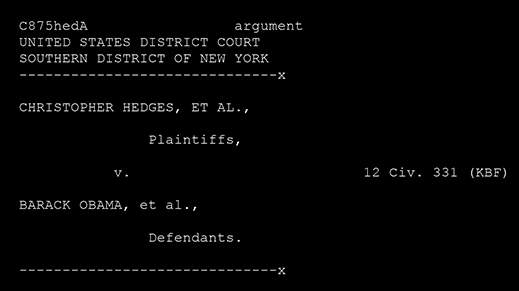
Last September a federal judge struck down part of the National Defense Authorization Act signed by President Obama that gave the government power to indefinitely detain anyone, anywhere in the world it considers to substantially support or be in associative force with terrorism. This includes US citizens. Judge Katherine Forrest of the Southern District of New York had ruled the indefinite detention provision of the National Defense Authorization Act likely violates the First and Fifth Amendments of U.S. citizens.
Attorney Carl Mayer:
- Some people call it (NDAA) the Homeland Battlefield Act because it treats the United States as a battlefield and allows the military to exercise power over civilians which is antithetical to our democracy and to our 200 years of Constitutional precedence.
- In May of 2012, we after a trial before Katherine Forrest who’s a federal judge in the Southern District of New York we achieved a preliminary injunction. That was then appealed but the appeal would stay pending a trial on a permanent injunction and on September 12, 2012, Judge Forrest issued a permanent injunction against the NDAA.
- The NDAA was stopped between May 16, 2012 and December 12, 2012.
- However, once that happened, the Obama Administration went into overdrive and immediately appealed that to the Second Circuit and asked for a stay of Judge Forrest’s order pending appeal.
- That stay lifted Judge Forrest’s injunction unfortunately the NDAA of 2012 now operates.
- In their papers, the government promised our clients would not be touched under the NDAA and they seemed to imply that no one in their (clients) position would be touched under the NDAA.
- StopNDAA.org
- People can go there and read Judge Forrester’s 112 page opinion and all the documents from the case.
- What’s at stake is the liberty and the right to free speech of all journalists and all activists and indeed any citizen of the United States of America.
- Because the military has never had the power to detain civilians.
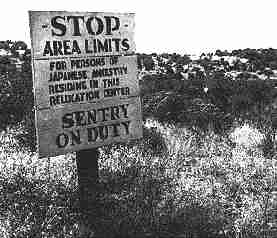
- The only exception to that was during World War 2 when Japanese-Americans were interred in prison camps.
- There’s not right to a trial by jury, there’s no right to an attorney. This an authoritarian measure.
- I would venture to guess your hosts and co-hosts are on a list somewhere.
- Chris Hedges for example was a correspondent for several years that covered not only al-Qaeda but 17 other groups that are one the State Department Terrorism List
- He testified that he had a reasonable fear that the NDAA could put him in jeopardy.
- You know as attorneys what’s incredible about this law is there’s no definitional section.
- It doesn’t define what associated forces are. It doesn’t define what substantially supportive means.
- Chris Hedges was detained by the military for leaving the press pool in Iraq.
- Now the NDAA allows these detentions “until the end of hostilities.”
- It really is a heinous statute.
- We lost the stay but we got an expedited appeal.
- The briefing is complete and we’re waiting for an oral argument date.
- The government has two moves, they say whoever brings the suit has no standing, then if it gets past that point they say, sorry the state’s secrets doesn’t allow you to have discovery here.
- Attorney General Holder stated that Americans are entitled to due process but that doesn’t necessarily means judicial process.
- It takes the view that “during war time” that the judiciary has no role to play.
- The NDAA is the culmination of 10 years of anti-civil liberties measures.
Guest – Attorney Carl Mayer runs the Mayer Law Group LLC and is the author of several books including “Shakedown” and “Public Domain, Private Dominion.” Carl Mayer is a former law professor and served as special counsel to the New York State Attorney General.
——————————————————————————