genocide, Human Rights
Podcast: Play in new window | Download
This year, U.S.-Armenian relations made headlines in a revealing way. In February 2026, Vice President JD Vance became the first sitting U.S. vice president to visit Armenia. His office posted”then swiftly deleted”a message saying he was at the Armenian Genocide Memorial to “honor the victims of the 1915 Armenian genocide.” The White House called it a staff error. A replacement post went up with all mention of the word “genocide” stripped out. When pressed, Vance called the massacre “a very terrible thing that happened a little over 100 years ago””and left it there.
The visit wasn’t only about remembrance. Vance and Prime Minister Pashinyan signed a civil nuclear cooperation agreement worth up to $5 billion in initial U.S. exports” part of a broader push to pull Armenia out of Russia’s orbit. Vance then traveled to Azerbaijan, advancing plans for a U.S.-backed trade and transit corridor aimed at bypassing both Russia and Iran. It’s a familiar pattern: Armenia is valuable enough to court as a geopolitical piece on Washington DC’s chessboard, but not important enough to have its genocide named out loud because that may upset Turkey, the NATO ally whose cooperation is needed more.
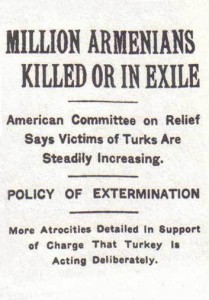
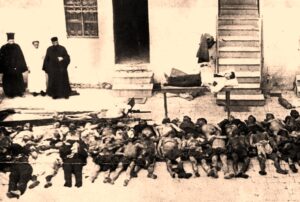
It Was Genocide: Armenian Survivor Stories
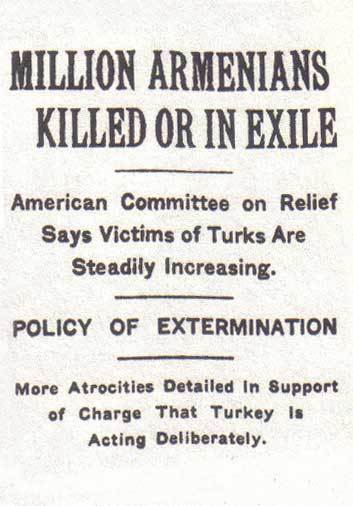
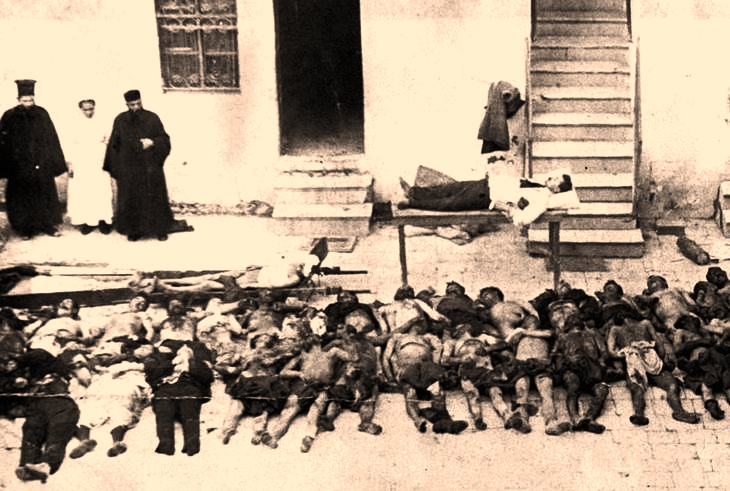
Around the world, April 24 marks the observance of the Armenian Genocide. On that day in 1915 the Interior Minister of the Ottoman Empire ordered the arrest and hangings of Armenian intellectuals and community leaders in Constantinople. It was the beginning of a systematic and well-documented plan to eliminate the Armenians, who were Christian, and who had been under Ottoman rule and treated as second class citizens since the 15th century.
The unspeakable and gruesome nature of the killings—beheadings of groups of babies, dismemberments, mass burnings, mass drownings, use of toxic gas, lethal injections of morphine or injections with the blood of typhoid fever patients—render oral histories particularly difficult for survivors of the victims.
Why did this happen? Despite being deemed inferior to Turkish Muslims, the Armenian community had attained a prestigious position in the Ottoman Empire and the central authorities there grew apprehensive of their power and longing for a homeland. The concerted plan of deportation and extermination was effected, in large part, because World War I demanded the involvement and concern of potential allied countries. As the writer Grigoris Balakian wrote, the war provided the Turkish government “their sole opportunity, one unprecedented” to exploit the chaos of war in order to carry out their extermination plan.
As Armenians escaped to several countries, including the United States, a number came to New Britain, Connecticut in 1892 to work in the factories of what was then known as the hardware capital of the world. By 1940 nearly 3,000 Armenians lived there in a tight-knit community.
Pope Frances calls it a duty not to forget “the senseless slaughter” of an estimated one and a half million Armenians by the Ottoman Turks from 1915 to 1923. “Concealing or denying evil is like allowing a wound to keep bleeding without bandaging it,” the Pope said just two weeks before the 100th anniversary of the systematic implementation of a plan to exterminate the Armenian race.
Special thanks to Jennie Garabedian, Arthur Sheverdian, Ruth Swisher, Harry Mazadoorian, and Roxie Maljanian. Produced and written by Heidi Boghosian and Geoff Brady.
Censorship, Civil Liberties, Freedom Of Speech, Human Rights, Iran, U.S. Militarism, Violations of U.S. and International Law, War Resister
Podcast: Play in new window | Download
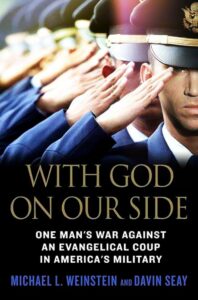
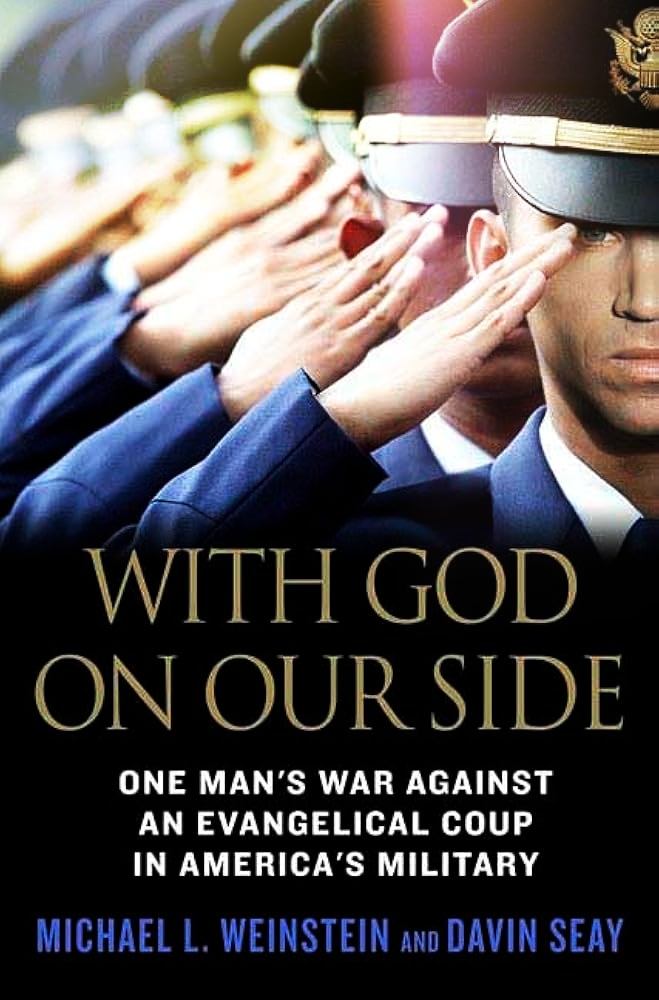
With God On Our Side: One Man’s War Against an Evangelical Coup in America’s Military
Pete Hegseth, the defense secretary and an Evangelical Christian, has explicitly framed the Iran war through the lens of his religious faith, weaving scripture into his remarks, praying for “overwhelming violence” against his enemies and insisting that God stands with the U.S. against Iran, a Muslim-majority nation of some 90 million people. The ex-Fox News host has long worn his faith on his sleeve — and on his flesh. He has a large Jerusalem cross tattooed on his chest and the words “Deus Vult,” a rallying cry used by the Crusaders, which means “God wills it,” are inked on his arm. In his 2020 book American Crusade, Hegseth rejected the principle of separation of church and called it “leftist folklore.” At a prayer breakfast on Feb. 6, he said that the U.S. “remains a Christian nation in our DNA, if we can keep it.”
Hegseth told CBS News on March 6: “The providence of our almighty God is there protecting those troops.” When asked if he views the conflict in a religious context, Hegseth responded: “I’m a man of faith, who encourages our troops to lean into their faith.” During a press briefing on the war four days later, he quoted Psalm 144, stating, “Blessed be the Lord, my rock, who trains my hands for war and my fingers for battle.” Last week, while hosting a Pentagon prayer service, Hegseth implored God to: “Let every round find its mark against the enemies of righteousness and our great nation” and asked that “wicked souls be delivered to the eternal damnation prepared for them.”
Guest – Mikey Weinstein has been described by Harper’s magazine as “the constitutional conscience of the U.S. military, a man determined to force accountability.” Mikey’s family has a long and distinguished U.S. military history spanning three consecutive generations of military academy graduates and over 130 years of combined active duty military service. Mikey is a lawyer and a 1977 Honor Graduate of the United States Air Force Academy.
A registered Republican, Mikey spent over three years working for the Reagan Administration as legal counsel in the White House. In 2006, he founded the Military Religious Freedom Foundation (MRFF) to battle the influence of far-right militant radical evangelical religious fundamentalists in the US military.He’s the author of two books “With God On Our Side: One Man’s War Against an Evangelical Coup in America’s Military” and “No Snowflake in an Avalanche: The Military Religious Freedom Foundation, its Battle to Defend the Constitution, and One Family’s Courageous War Against Religious Extremism in High Places.”
In 2011, Americans United for the Separation of Church and State presented Mikey with AU’s first ever Person of the Year Award, calling him “the leading voice protecting church-state separation in the military.” In December 2012, Defense News named Mikey one of the 100 Most Influential People in U.S. Defense. He was also named one of the 50 most influential Jews in America by the Forward, one of the nation’s preeminent Jewish publications. Not unexpectedly, Mikey has been reviled by the radical fundamentalist Christian far-right, which has called him “Satan”, “Satan’s lawyer”, “the Antichrist”, “That Godless, Secular Leftist”, “Antagonizer of All Christians”, “Most Dangerous Man in America” and “Field General of the Godless Armies of Satan.”
—-
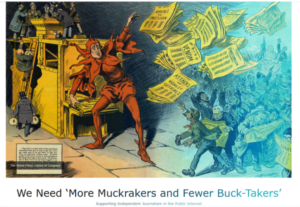
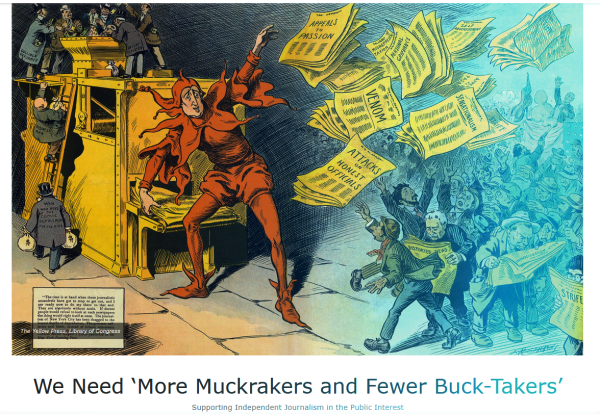
We Need More ‘Muckrakers and Fewer Buck-Takers
There was a time when journalism didn’t just report the news—it changed the country. It broke monopolies, exposed corruption, and forced presidents to act. Today, with public trust in media at historic lows, that kind of reporting can feel like a relic. But what if the real story isn’t that it’s gone—but that we’ve stopped supporting it? Media scholar and activist Mickey Huff has just written a provocative call to action titled We Need More ‘Muckrakers and Fewer Buck-Takers. It’s a phrase rooted in the legacy of Carl Jensen, who believed journalism should serve the public—not profits—and who spent decades exposing the stories corporate media ignored.
At a moment when misinformation spreads faster than truth and corporate consolidation shapes what we see and don’t see, this conversation asks something deeper: What kind of media system does democracy require—and what role do we play in rebuilding it?
Guest – Mickey Huff is the director of Project Censored and president of the Media Freedom Foundation, where he has co-edited its annual Censored book series since 2009. In 2024, he joined Ithaca College as a Professor of Journalism and the Distinguished Director of the Park Center for Independent Media. Through these roles, he leads efforts in critical media literacy, independent journalism, and the production of the weekly syndicated Project Censored Show. Park Center For Independent Media

—————————–
Economics, Human Rights, U.S. Militarism, Violations of U.S. and International Law, War Resister
Podcast: Play in new window | Download
An Economic State Of The Union: Professor Richard Wolff
President Donald Trump did not deliver the traditional State Of The Union address to the American people and Congress last week. Instead, for nearly two hours, he hosted what amounted to a MAGA campaign rally. Trump’s approval rating is under 40% and sinking. The two uppermost concerns of the American people are their increasing economic difficulties and their opposition to ICE and its reign of terror in major American cities like Minneapolis, Chicago, and Los Angeles. He put both forward as huge successes.
Trump has secured a budget of billions of dollars to fund ICE, which has more money going forward than is in the combined budgets of all the state and local police departments in the United States. In addition, the Department of Homeland Security is either building, or leasing, space for huge detention centers across the country. Trump has issued National Security Presidential Memorandum Number 7 (NSPM7) which targets critical thinkers. NSPM7 was then supplemented by a list of laws by Attorney General Pam Bondi, which she indicates will be used against these disobedient critical thinkers and activists.
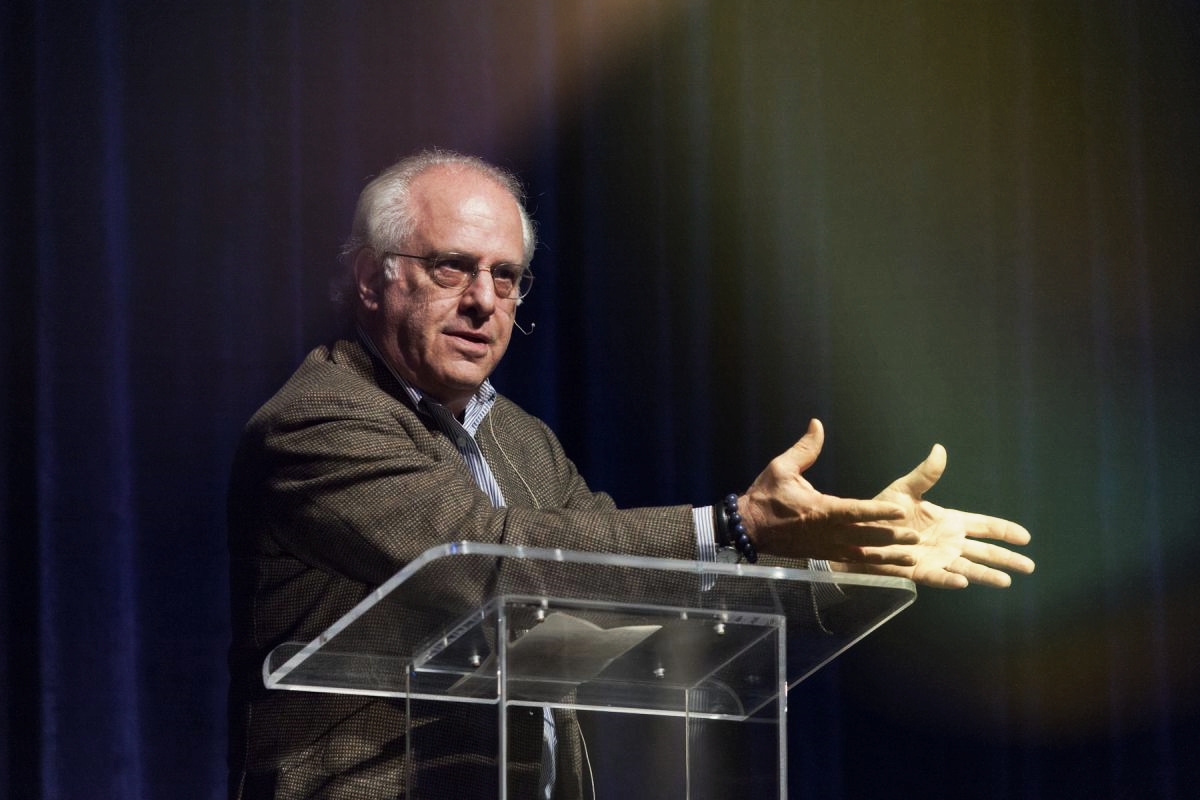
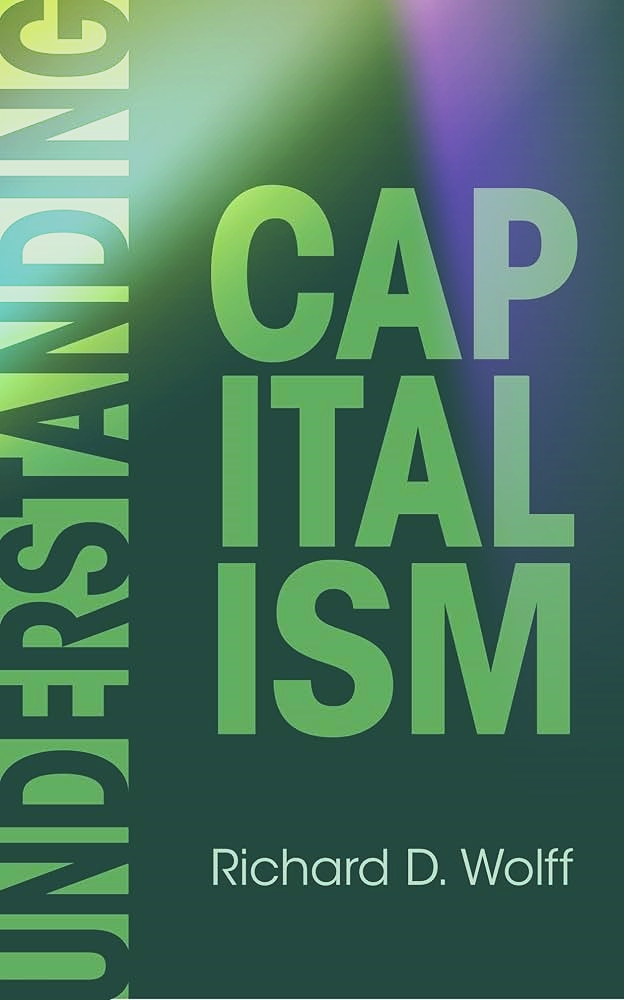
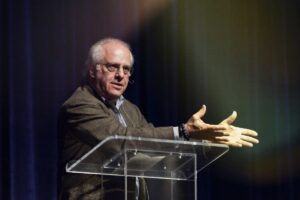
Guest – Richard Wolff is Professor Emeritus from the University of Massachusetts, and the author of Understanding Capitalism. According to New York Times, Richard Wolff is, probably America’s most prominent Marxist economist. He is the founder of Democracy at Work and host of their national syndicated show Economic Update. Professor Wolff has authorized numerous books on capitalism and socialism, including most recently “The Sickness is the System: When Capitalism Fails to Save Us From Pandemics or Itself“, “Understanding Socialism“; and “Understanding Marxism”, which can be found at democracyatwork.info.
—-
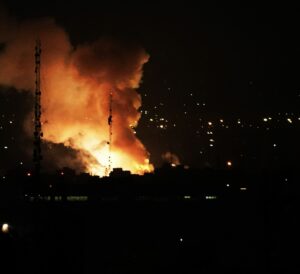

US-Israeli Attacks Against Iran, IEEPA Tariffs And Cuban Fuel Blockades
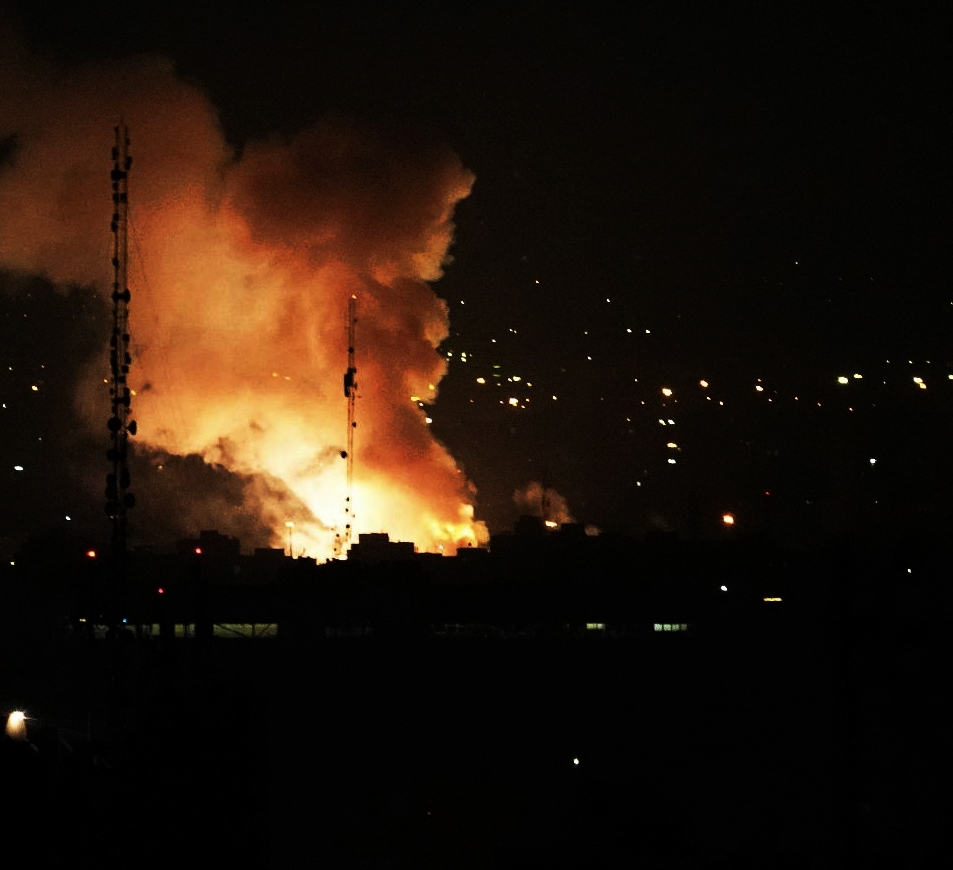
More than 1,000 Iranians — primarily civilians, including 180 students at a girls’ elementary school in Minab — have been killed in the U.S.-Israeli war of aggression against Iran, that was launched February 28 by President Donald Trump and his accomplice, accused war criminal Israeli Prime Minister Benjamin Netanyahu. This aggression has destabilized the region and triggered Iran’s legitimate exercise of self-defense.
Trump claimed he attacked Iran to prevent it from developing nuclear weapons. But U.S. intelligence has found that Iran is not acquiring nuclear weapons. Before the February 28 U.S.-Israeli attack, the country of Oman had been brokering negotiations over Iran’s nuclear program. The U.S. and Israel insisted that Iran stop enriching uranium, limit its ballistic missile program, and end support for its “proxies” Hezbollah and the Houthis.
On February 27, Oman’s foreign minister said on CBS News that the negotiations had made significant progress, and a nuclear agreement was “within our reach.” Nevertheless, Trump maintained that diplomacy had been exhausted. The U.S. and Israel began bombing Iran the next day.
One month before the U.S. and Israel attacked Iran, Trump issued an executive order aimed at tightening the U.S. noose around Cuba’s neck. Trump’s January 29 order preposterously declared Cuba “an unusual and extraordinary threat,” without providing a shred of evidence. He warned that he would impose punitive tariffs on states that deliver fuel to Cuba. Trump’s intention is to suffocate the Cuban people, who rely on oil for 80 percent of their electricity.
On February 20, however, the Supreme Court struck down Trump’s massive tariffs because they exceeded authority delegated by Congress under the International Emergency Economic Powers Act. The IEEPA authorizes the president to regulate commerce during national emergencies created by foreign threats. Later that day, in response to the court’s decision, Trump issued an executive order ending IEEPA-based tariffs, including those that would penalize countries that ship oil to Cuba. That order stops the collection of all IEEPA tariffs, including those threatened in his January 29 Cuba emergency order.
Trump’s attempt to tighten the fuel blockade of Cuba came on the heels of the U.S. oil blockade of Venezuela, which had supplied more than 50 percent of Cuba’s oil. Countries that provided Cuba with oil, particularly Mexico, halted their shipments after January 29. Oil shipments to Cuba have virtually stopped. The lack of electricity has led to widespread blackouts, impacting hospitals and essential services. Cuba’s oil reserves could be totally depleted by March.
Guest – Marjorie Cohn, a former host on Law and Disorder is professor emerita at Thomas Jefferson School of Law, dean of the People’s Academy of International Law, and past president of the National Lawyers Guild. She sits on the national advisory board of Veterans For Peace, she is a member of the bureau of the International Association of Democratic Lawyers, and serves as the U.S. representative to the continental advisory council of the Association of American Jurists. Her books include Drones and Targeted Killing: Legal, Moral, and Geopolitical Issues. She writes a regular column for Truthout, including two recent ones about Cuba and Iran.
——————
Civil Liberties, Civil Rights, Freedom Of Speech, genocide, Human Rights, Violations of U.S. and International Law
Podcast: Play in new window | Download

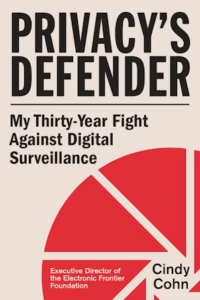
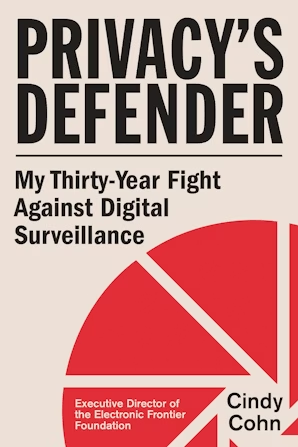
Privacy’s Defender: My Thirty-Year Fight Against Digital Surveillance
Civil liberties attorney Cindy Cohn is widely recognized as one of the leading voices on digital freedom in the United States. As she prepares to step down as executive director of the Electronic Frontier Foundation, or EFF, she leaves behind a 25-year legacy at the forefront of the fight for online rights. Over the years, she has helped shape some of the most important debates around encryption, government surveillance, and freedom on the internet.
Cohn first rose to national prominence in the 1990s as lead counsel for the EFF and PhD student Daniel Bernstein in Bernstein v. Department of Justice. That was the landmark case establishing that computer code is protected speech under the First Amendment. During the height of the so-called “crypto wars,” that decision helped free encryption from government control and shaped the security of the modern internet.
As legal director, and then as executive director, at EFF, Cindy has led major legal challenges to NSA mass surveillance. She as defended independent security researchers, fought government overreach justified in the name of national security, and pushed back against expanding corporate data collection. A central voice at the intersection of law and technology she has shaped debates over encryption, privacy, online speech, and civil liberties in the digital age. Her new book, Privacy’s Defender, published by MIT Press, reflects on those battles and what comes next.
—-
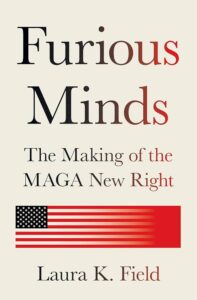
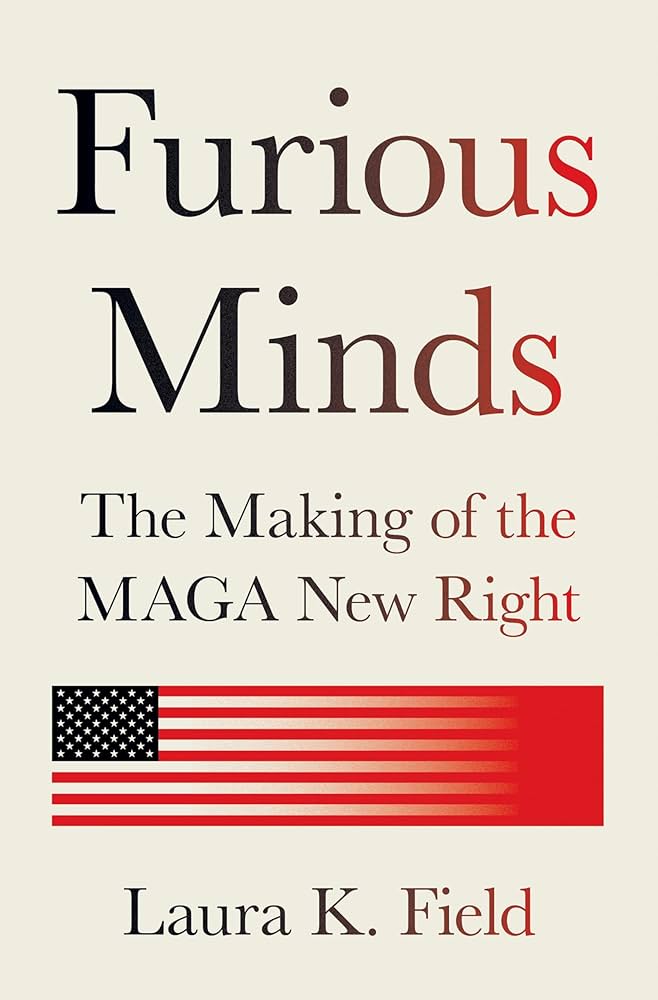
Furious Minds: The Making of the MAGA New Right
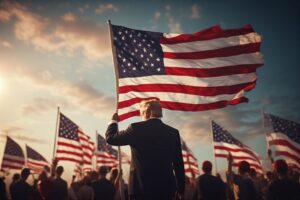
By all that is right and just, we will be rid of Donald J. Trump as President of the United States on January 20, 2029. But we will not be rid of the tremendous damage he is causing to our country. And we will not be rid of the cruel, populist, racist, White Christian, patriarchal, and nationalist MAGA New Right ideology that now dominates the Republican Party. Even after Trump decamps to Mar-a-Largo, MAGA will continue to pose an existential threat to our constitutional democracy.
We need to fully understand that there is an extensive, well-financed ideological structure made up of think tanks, publications, university institutes, and PhDs, that provide an intellectual patina to this dangerous movement. Unless the pro-democracy resistance exposes and dismantles the MAGA New Right, it will find replacements for Trump and will continue to wreck havoc, destroying the lives of people in the United States and around the world.
Guest – Laura K. Field is the author of the revealing new book Furious Minds: The Making of the MAGA New Right. Field holds a PhD in government from the University of Texas at Austin, and has written for The New Republic, Politico, and The Bulwark. Field’s exposure of the ideological foundations of the MAGA New Right is based on copious research and her own experiences while she was embedded in that movement. She says she is grateful she “extracted” herself from that world as she saw how untethered the mostly privileged male purveyors of MAGA’s dangerous tenets are from the everyday struggles of real people. She realized how dedicated they are to eliminating the hard-fought advances our pluralistic society has won based on the values of equality, compassion, and justice.
—————-
Civil Liberties, Civil Rights, Gaza, genocide, Human Rights, U.S. Militarism, Violations of U.S. and International Law, War Resister
Podcast: Play in new window | Download
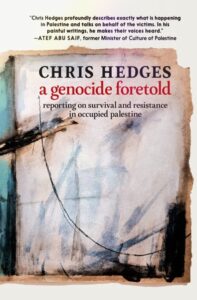
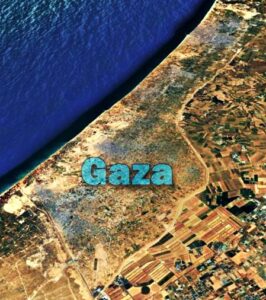
Chris Hedges: Assessing The Political Landscape In 2026
What we are going to do in this segment of today’s Law and Disorder is learn the thinking of our guest on the following questions. Is there a meaningful ceasefire in Gaza? When will the Palestinians have their own sovereign nation? Is it reasonable to still designate America as a democracy? Is President Trump an authoritarian and would-be dictator? Is it quite possible that the 2026 mid-term elections will be cancelled or so demeaned as to be totally unrepresentative of the true will of the American people?
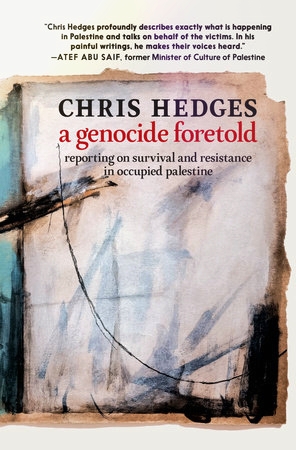
Guest – Chris Hedges is a Pulitzer Prize winning journalist and author, and the former Middle East correspondent for the New York Times. Among his more than a dozen books are American Fascism: The Christian Right and the War on America; The Greatest Evil Is War; and A Genocide Foretold: Reporting on Survival and Resistance in Occupied Palestine. Chris Hedges is also one of the contributors to the book titled From the Flag to the Cross: Fascism American Style, a book composed of summaries of interviews with guests here on the Law and Disorder radio show, and available for purchase at O/R Books.
—-
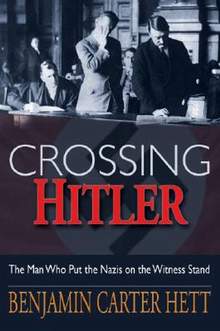
Crossing Hitler: The Man Who Put the Nazis on the Witness Stand
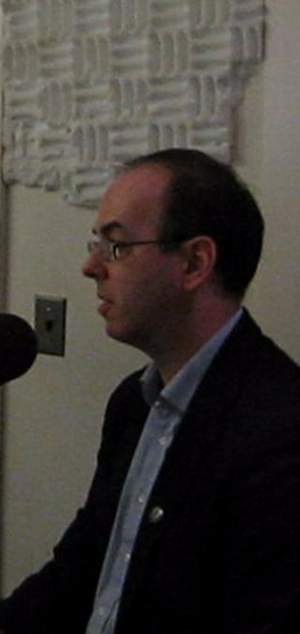
Hitler’s fascist organization came to power in Germany. It employed the violence of Hitler’s storm troopers. There is a parallel today with President Trump’s administration and the MAGA people employing the violence of ICE to terrorize people in our large cities. Hitler tried unsuccessfully to distance himself from the violence of the storm troopers. He was not successful because of the brilliant cross examination by German attorney Hans Litten, who put Hitler on the stand and subjected him to a devastating three hour cross examination. Today we re-broadcast Law and Disorder founding cohost attorney, Michael Ratner’s interview with Benjamin Carter Hett, the history professor who wrote the book Crossing Hitler: The Man Who Put the Nazis on the Witness Stand.
Author Benjamin Hett outlines the fascinating and tragic story of a young lawyer Hans Litten in his recent book Crossing Hitler: The Man Who Put the Nazis on the Witness Stand. Before the Nazis rose to power in the early 1930s, they incited calculated violence among the working class in German taverns. Four Nazi stormtroopers were charged with firing randomly into a dance hall where a communist hiking club were holding a party. Three young men were wounded. Hans Litton was the advocate for the 3 men.
Hans Litten called Hitler to the witness stand to show that the Nazi party was a violent party, and by cross examining Hitler he tried to prove that. Litten forced Hitler to contradict himself, reducing him to humiliating rage that revealed his true intention. At that time, Hitler wanted to be a legal party in Germany and of course you couldn’t be a party that was extra-constitutional and legal but at the same time he didn’t want to disappoint the base of his party which was this violent working class aspect. Two years later, the Nazi Party rose to power.
What came after the Reichstag Fire was the arrest of about 5 thousand people across Germany who the Nazis have identified as opponents or potential opponents. Hans Litten was among them and sent to a concentration camp. Author Benjamin Hett describes a powerful narrative of Hans facing torture yet still telling stories and teaching art to other prisoners. Hans Litten was born in 1903 in Halle in Central Germany, his father was a law professor and Jewish but converted to German evangelical (Lutheran).
Guest – Benjamin Hett, author of Crossing Hitler: The Man Who Put the Nazis on the Witness Stand. Hett is a former trial lawyer, and now Associate Professor of History at Hunter College.
——————————–
Civil Liberties, Civil Rights, Gaza, genocide, Human Rights, Surveillance, Targeting Muslims, War Resister
Podcast: Play in new window | Download
On Friday, following the taping of this show, the UK High Court ruled that the ban on Palestine Action, which we examine, was unlawful.
Our guest Fahad Ansari released this statement: “With jurors repeatedly refusing to convict individuals for smashing up Israeli weapons factories and now the High Court quashing the government’s proscription of a group dedicated to that goal, it is evident that the British public overwhelmingly opposes Britain’s support for Israeli genocide.”

British Movement Lawyer Exposes Being Targeted By Senior Politicians and Cointel Police
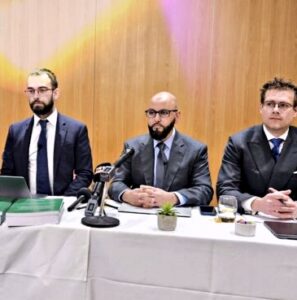
When repressive governments around the world attack their own people and liberal democracies fight back, some of the first responders are movement lawyers. Unlike cowardly law firms that capitulate in advance, as we have seen here in the United States, movement lawyers work hand-in-hand with activists not merely challenging what the government is doing but putting the government itself on trial.
The roots of movement lawyering in the United States can be traced back to the civil rights movements of the 1960s and 1970s, where lawyers challenged laws that upheld segregation and other forms of discrimination. These lawyers used the legal system not just as a passive tool but as an active agent of change. They helped litigate landmark cases that desegregated schools, secured voting rights, dismantled discriminatory laws, challenged draft laws and questioned the legality of the Vietnam War.
The founders of this program Law and Disorder, Michael Ratner, Michael Smith, Jim Lafferty, and Heidi Boghosian are all prominent movement lawyers. But movement lawyers are not confined to the United States.
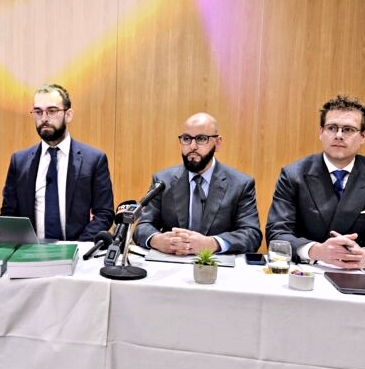
Guest- Fahad Ansari, is a senior civil liberties solicitor based in London. As a movement lawyer, he developed a niche in representing individuals and communities affected by counter-terrorism legislation, state surveillance, and discriminatory policing. His career has been defined by taking on some of Britain’s most sensitive cases including representing those stripped of their citizenship on grounds of national security and representing Hamas in its 2025 application to be removed from the British government’s list of proscribed terrorist organizations.
The Hamas case resulted in Ansari being smeared by senior politicians and targeted by British counter-terrorism police and the government agency that regulates the practice of law in the UK.
On August 6, 2025, Ansari was stopped by officers at the port of Holyhead as he returned from a family holiday in Ireland with his wife and four children. Ansari said the bulk of the questioning was about Palestine Action, a group recently proscribed under the Terrorism Act. He was also asked about Hamas but refused to answer, citing client confidentiality. Ansari said he was held by police for three hours, fingerprinted, photographed and swabbed for DNA and told to remove his face ID and pin from his phone or face arrest. The following day, the contents of his phone were copied by the police.
Ansari said that “In the decade that I have been involved in national security cases, I have never heard of lawyers in England being targeted to this extent because of their clients. Some have complained that representing Hamas brings the profession into disrepute. Yet, what really undermines the integrity of the profession is when unpopular clients are unable to secure legal representation because of fear of public opprobrium and state intimidation.”
—-

Michigan Movement Lawyer Mark Fancher
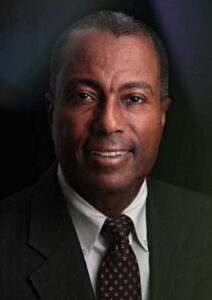
As we celebrate Black History Month, conversations often drift toward a comfortable, sanitized narrative of progress. But our guest today, Mark Fancher, has spent his career in the uncomfortable spaces where the struggle for racial justice remains ongoing, contested, and— for far too many communities—urgent.
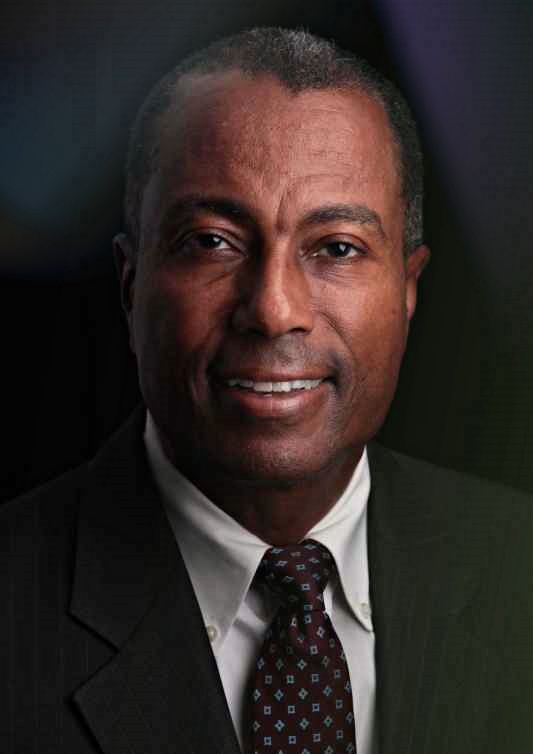
Mark recently retired as Senior Staff Attorney with the Racial Justice Project of the ACLU of Michigan. But his commitment to justice did not begin there. A longtime leader in the National Conference of Black Lawyers and an active member of the National Lawyers Guild, he has devoted decades to challenging the systems that produce inequality—not merely documenting them.
In Michigan, those systems are stark, and those injustices are often enforced by the badge. Black residents comprise roughly 14 percent of the state’s population, yet account for nearly half of those incarcerated. That disparity is not incidental. It reflects policies, practices, and policing strategies entrenched over generations. Mark has litigated the human consequences behind those numbers—from confronting a culture of brutality in the City of Taylor, which he described as functioning like an “occupying army,” to defending Black officers such as Johnny Strickland, who faced retaliation within their own departments for speaking out.
Mark is no stranger to the friction that truth-telling provokes. More than a decade ago, at a “Unity Breakfast” in Muskegon, his remarks about white privilege and police misconduct prompted audience members to walk out. He was labeled “divisive.” But as Mark reminded them then—and reminds us now—Dr. King did not preach comfort. He taught the oppressed to confront injustice without fear and without retreat.
———————